Often in the first weeks
Nights online, promises of a cure, guilt. The urge to “fix” your child fast.
Guide · After the diagnosis
A calm guide for the first weeks: breathe, understand the basics and adapt the environment – instead of trying to change your child.
Read on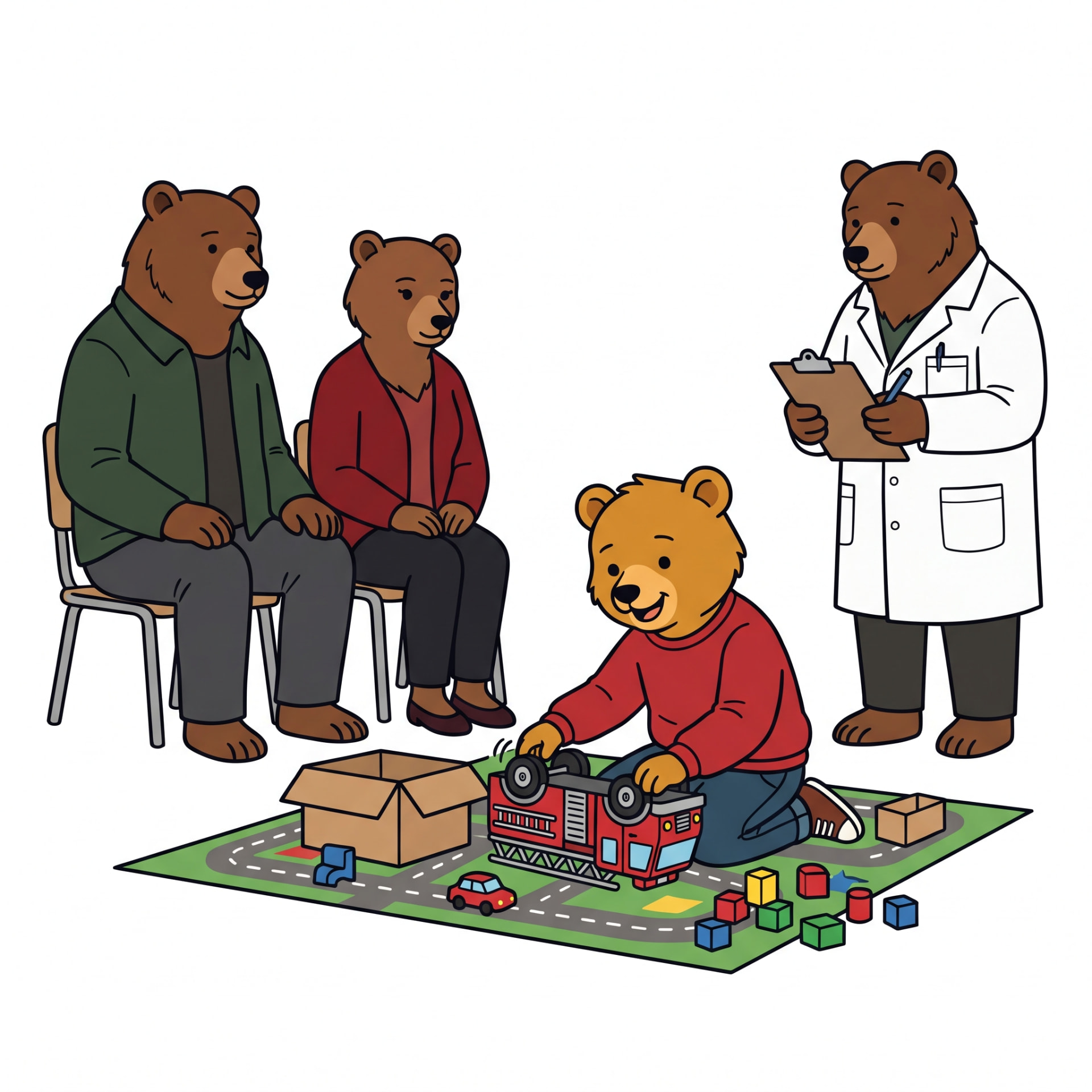
After the clinic visit
Many parents leave the clinic with diagnosis codes, test scores and the advice to find a therapy. Waiting lists are often long. In that gap you search at night – and quickly land on miracle diets, cures and drills.
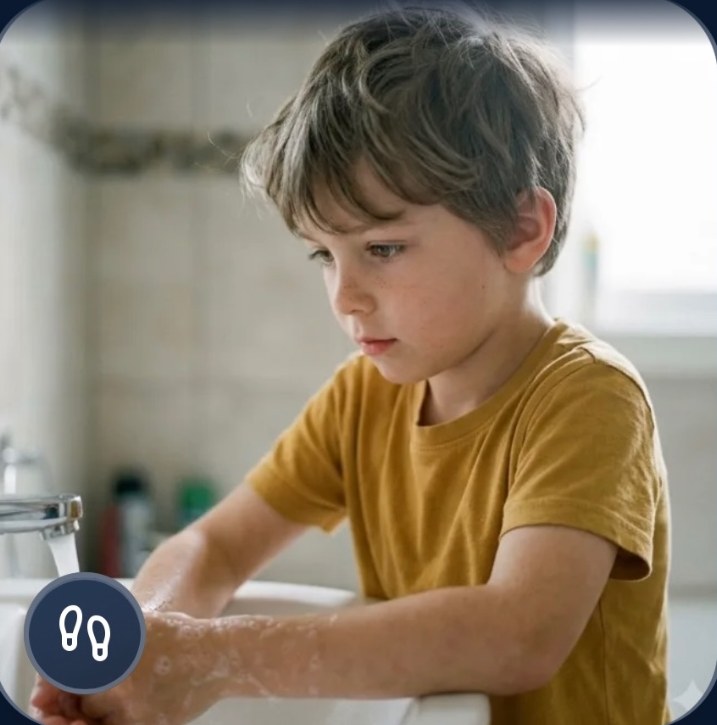
Often in the first weeks
Nights online, promises of a cure, guilt. The urge to “fix” your child fast.
What really helps
Understanding how your child's brain processes input. Then adapting the environment: calmer, predictable, visible.

A letter from one parent to another
And so you went looking for help, just like I did back then. Like thousands of families, you will have noticed: the flood of tips and offers – especially online – is simply overwhelming.
At first I was constantly afraid I hadn't yet found that one "miracle pill" that might make all the difference. We tried almost everything: symbol cards, therapies, diets, special trips. Most of it didn't work in the long run. That was deeply sobering.
After a particularly hard phase with our son Elija, I dug into neuroscience – into internationally recognised studies. I began to understand how Elija's brain works.
I wish someone had told us at the diagnosis: his brain probably has many more local connections than ours, but fewer big highways.
Suddenly so much made sense. Why he can't "just quickly" go from the car through the garden into the house and to the sink. Every one of those transitions means a huge switch that costs energy. Once he's into something, it's hard for him to let go. He is like a fascinating high-performance computer that overheats very quickly.
I want to share what I've learned with you here.
Day 1 · today
Seven cards, one story. They show what research describes about the autistic brain – and why it is almost always the environment you can change. Every statement is backed by a study.

Wiring
More local connections, weaker long-distance routes.
In early childhood the brain removes surplus connections (pruning). In autism this pruning often appears weaker. Many local connections remain – which explains the strong eye for detail. Connections between distant brain areas are weaker. Bringing speech, faces and context together at once therefore takes a lot of effort.

Attention
Full power on one thing – switching costs a lot.
Many autistic children focus their attention like a laser on a single interest (monotropism). In flow this works beautifully. Redirecting the beam abruptly, say from play to dinner, is a hard switch. Resistance at transitions isn't defiance; it's a switch with a high cost.

Sensory filter
Less filtering, more input at once.
Our brain tunes most things out: the ticking clock, the label in a sweater, the fridge's hum. For autistic children many of these signals arrive less filtered and more intense. Studies describe altered inhibition in the brain. An ordinary room can become constant noise that exhausts.
Prediction
Small changes feel big.
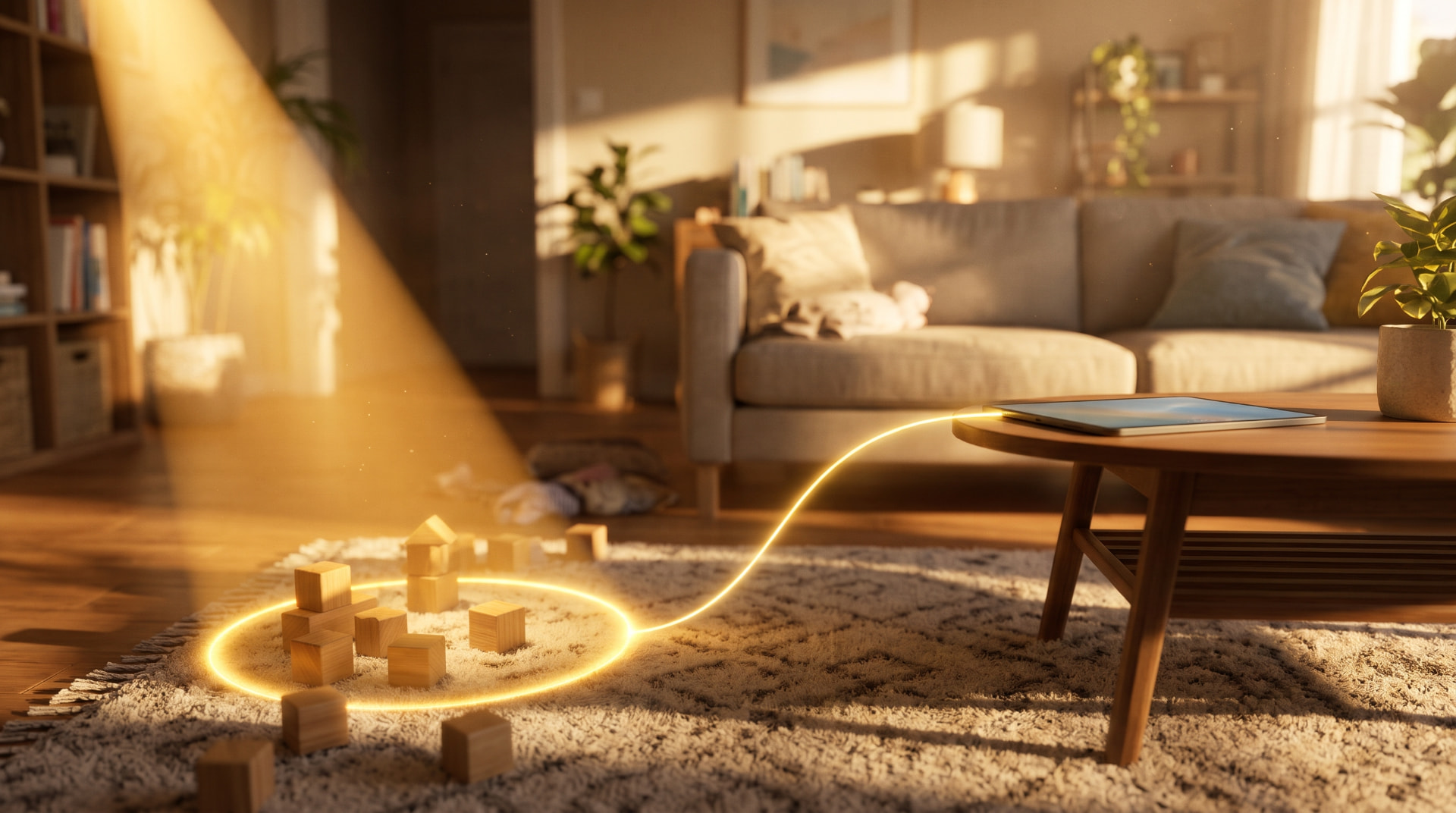
The brain constantly compares what it expects with what happens. In autism, deviations seem to be weighted more strongly – the world becomes "too real". A moved chair, a new smell or a changed order is then not a detail but an alarm. Predictability isn't a luxury; it is safety.
Executive function
The wish is there. Planning and starting is the hard part.
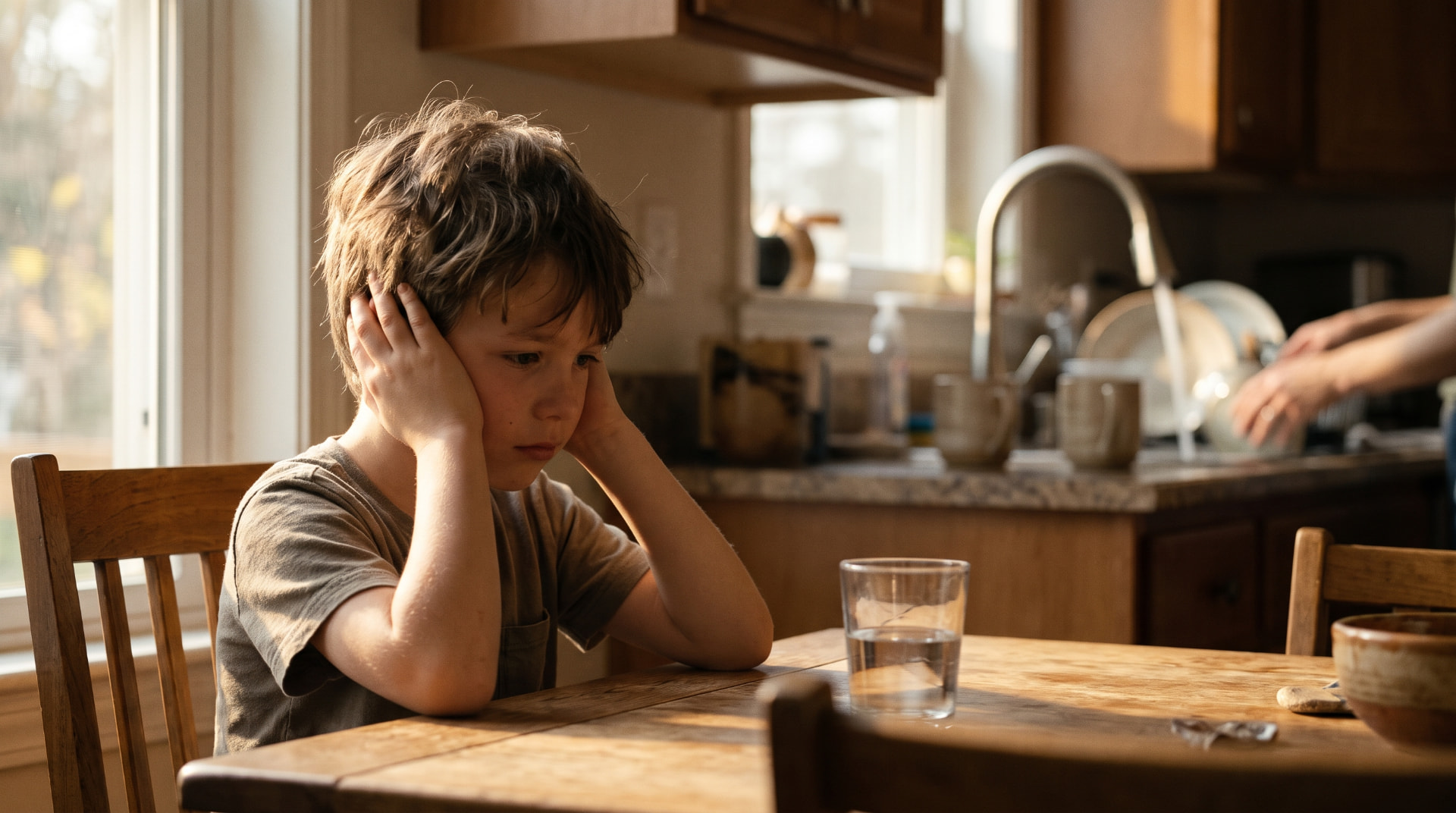
Planning, keeping sequences, starting an action and switching flexibly are executive functions, and many autistic children find them hard. Your child may feel thirsty, but "kitchen, cup, pour" doesn't start by itself. They aren't unwilling – they need help starting, in small clear steps.

Energy
Skills lost in a crisis usually come back.
When everything gets too much, the system drops to low power: speech, patience and skills suddenly seem gone. Autistic adults describe this as burnout from lasting overload. On top of that, body signals like hunger or thirst are often perceived differently. The good news: with calm and safety, what seemed lost usually returns.

What follows
As much structure as needed, as much freedom as possible.
When the brain spends so much energy on input, transitions and predictions, anything that takes work off it helps: a visible plan, an announced change, a quiet place. This outer structure takes over what is hard inside. In bad phases it carries the day, in good ones it runs quietly in the background. That is exactly why we built a visible daily plan for Elija.
Days 2 to 7 · Breathe
Relief, grief, anger, overwhelm – all of it is allowed. The diagnosis doesn't change who your child is. It explains why some days cost so much energy. Every activity costs or gives energy – seeing that makes planning calmer.
Read the tide modelDays 8 to 21 · Adapt the environment
Check your home for input: flickering light, humming devices, loud rooms. Build a retreat. Use short sentences and wait after a question. Make the day visible: what now, what next, when is a break?
The 10-second rule
Say the request. Then stay quiet and count to ten inside. Every repetition restarts the processing.
First – then
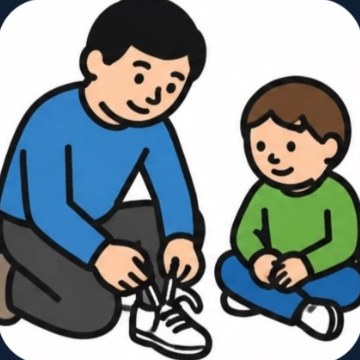
Not "Come inside", but "First shoes off, then tablet". Two steps give the switch a meaning.
Small steps
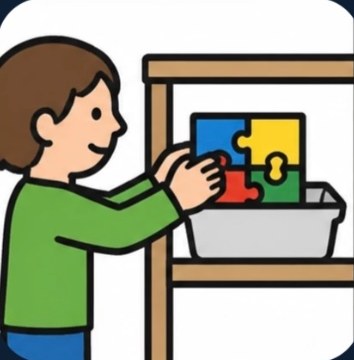
Instead of "Go to bed": get out, to the door, jacket off. Split big tasks into small bites.
Show transitions, don't talk
Bring a familiar object, let a sand timer run, show the next picture. Then the plan decides – not you.
Days 22 to 30 · Paperwork in moderation
Join the waiting lists and look into care grade, disability card and early intervention. But don't overload your child's afternoons. Rest is not a luxury – it is the foundation.

“At its core, it's about a human being with their own needs – and a right to self-determination and inclusion.”
— Silke Bauerfeind, Founder of Ellas Blog (in the interview on Elija OS)
Read the interview & see our daily life photosStart with one visible day. If you want it digital and without a laminator, try the Elija OS demo.