Guide · In the middle of everyday life

Autism in daily life: when many separate pieces become one system.

For families who are already in the middle of it: AAC, picture cards, TEACCH, energy and transitions – five building blocks that finally talk to each other. Take what you're missing, keep what already works.

Read on
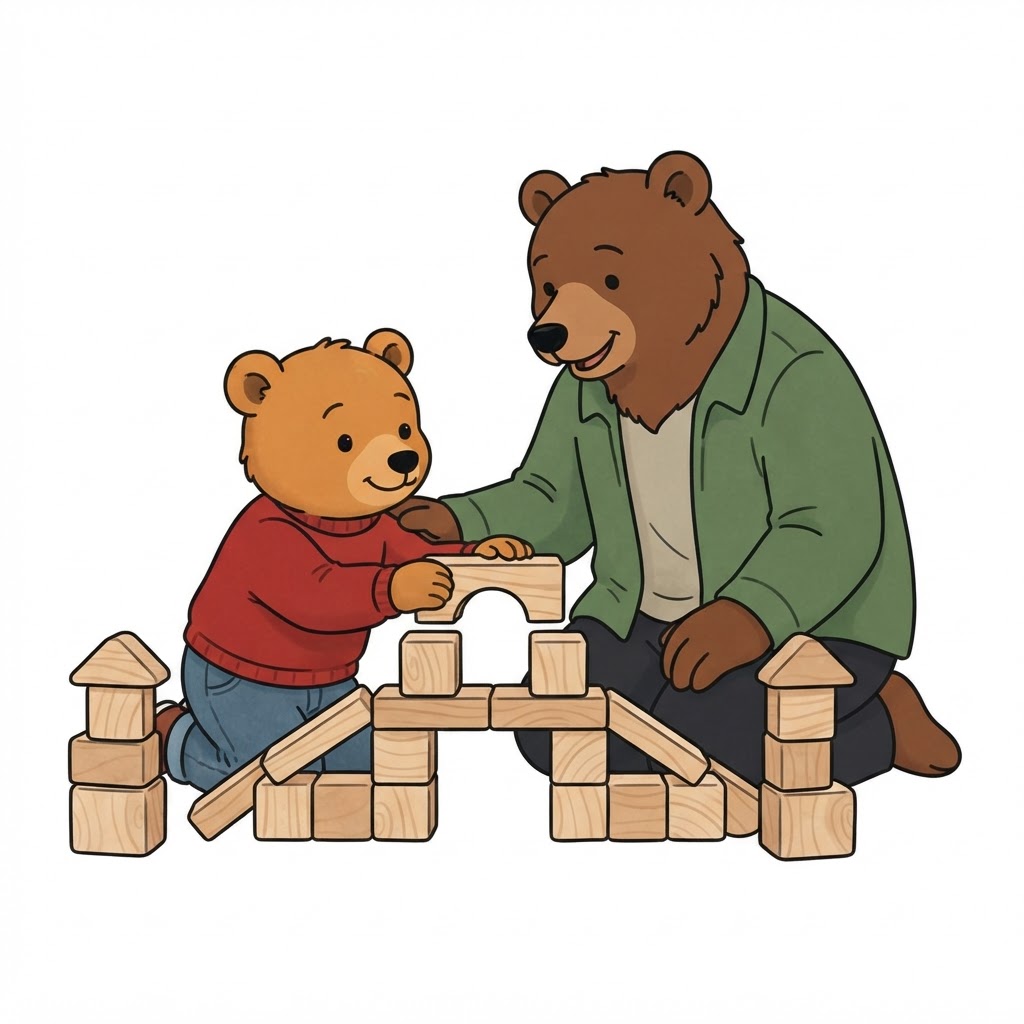
A small bear in a red sweater and a big bear in a green jacket build a bridge out of wooden blocks together.
Alex carrying Elija on his shoulders in the forest

A letter from Alex, father of Elija

Glad you're here – even if you've been in the middle of it for a long time.

Our son Elija was diagnosed years ago. And the longer we walk this path, the more clearly I see a pattern that wears many parents out: support around autism is completely fragmented. There are countless dots, but hardly any lines.

It feels like a box of pieces from five different puzzles – without knowing the full picture. An AAC app here, a velcro board there, TEACCH, occupational therapy or a school assistant. Each piece means well on its own. But in everyday life these supports don't talk to each other: the velcro board knows nothing about the AAC device. And school knows nothing about the empty battery in the morning.

When I read deep into neuroscience during a hard phase, the scales fell from my eyes: our children's brains often work in highly specialised islands – senses, language and the sense of time don't automatically connect on the side. If our everyday supports stand just as isolated side by side, we leave our children alone with the bridge-building.

That's exactly why this guide and Elija OS exist: not as a sixth separate piece, but as the frame that finally connects the building blocks you already have. Take your time to see what's missing right now – and leave everything else.

With all our heart, Alex and family

Where you stand · 30 seconds

What do you already use at home – and where is the bridge still missing?

Tap what you already use in everyday life. You'll see right away why single tools often stay isolated – and which block will help you most next.

Tap the tools you already use below:

Where you stand

No stress – nobody needs everything to be perfect. Jump straight to the block where everyday life grinds most right now.

Block 01 · Communication

Language is more than words. A sentence only counts when it changes something.

Many families have picture cards on the fridge and an AAC device in the backpack – yet in a crisis both stay unused. Why augmentative communication (AAC) and daily structure belong together.

Read block 1
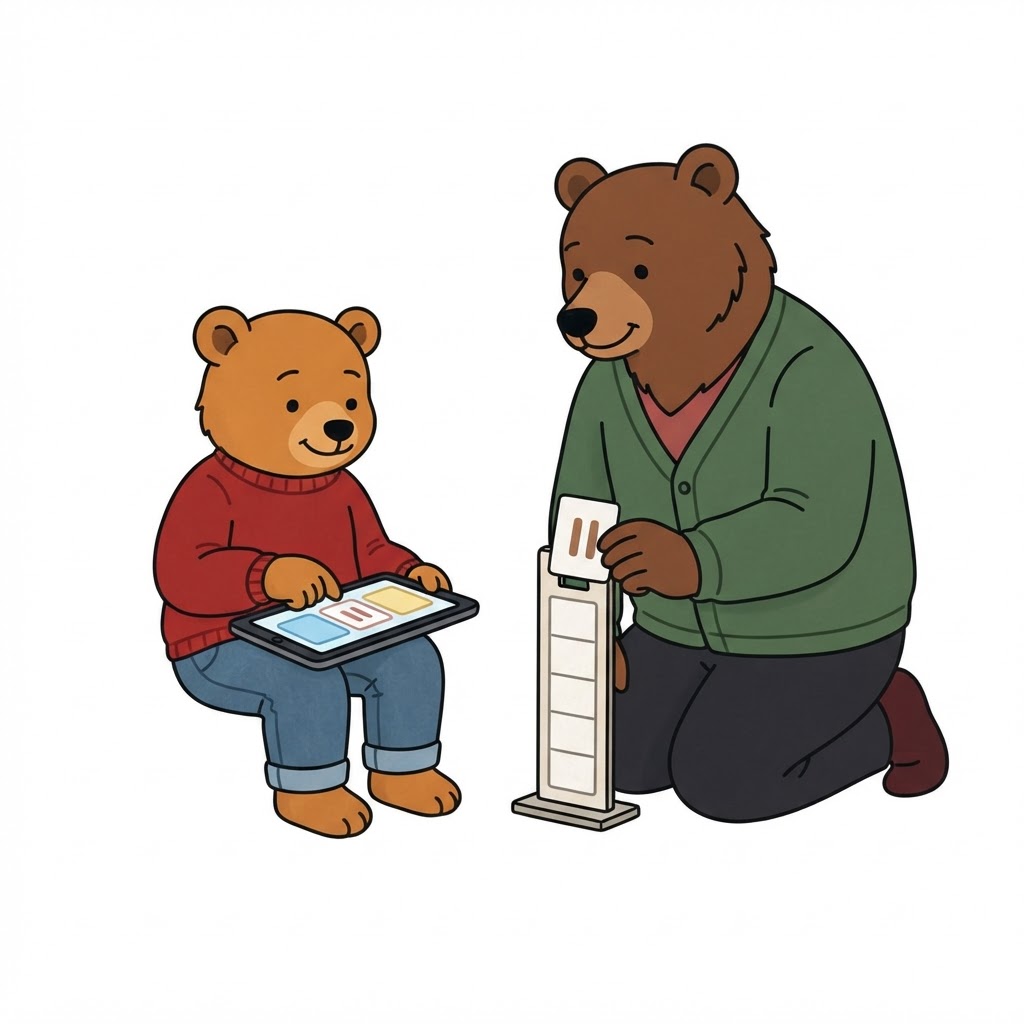
Small bear taps a tablet with symbol tiles, big bear puts a pause card into the day plan.
  • What you may already have

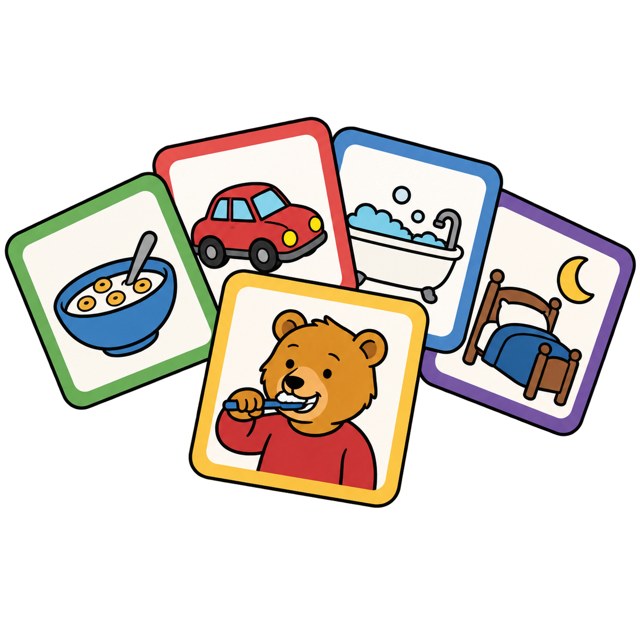
    An AAC device from counselling, laminated picture cards or first signs in everyday life.

  • Where it often still sticks

    The AAC device is a separate extra. Or the child presses "pause" but the schedule on the wall carries on rigidly – the child feels no real effect.

  • The connecting principle

    Communication and the day plan must talk to each other. When a child shows "too loud" or "not now", the routine may visibly move with it.

Three small steps for everyday life

  • Small bear shows a stop card, big bear pauses respectfully.

    Protective words before polite ones

    Before colours, animals or "please/thank you", your child needs words that protect: "pause", "done", "help", "too loud", "alone". A child who can show "stop" has to scream less often.

  • Big bear casually taps an AAC device, small bear watches curiously.

    Model instead of testing

    Never demand "Say it on the device first!" Tap the matching symbols yourself in passing while you speak calmly (modelling) – without any test pressure.

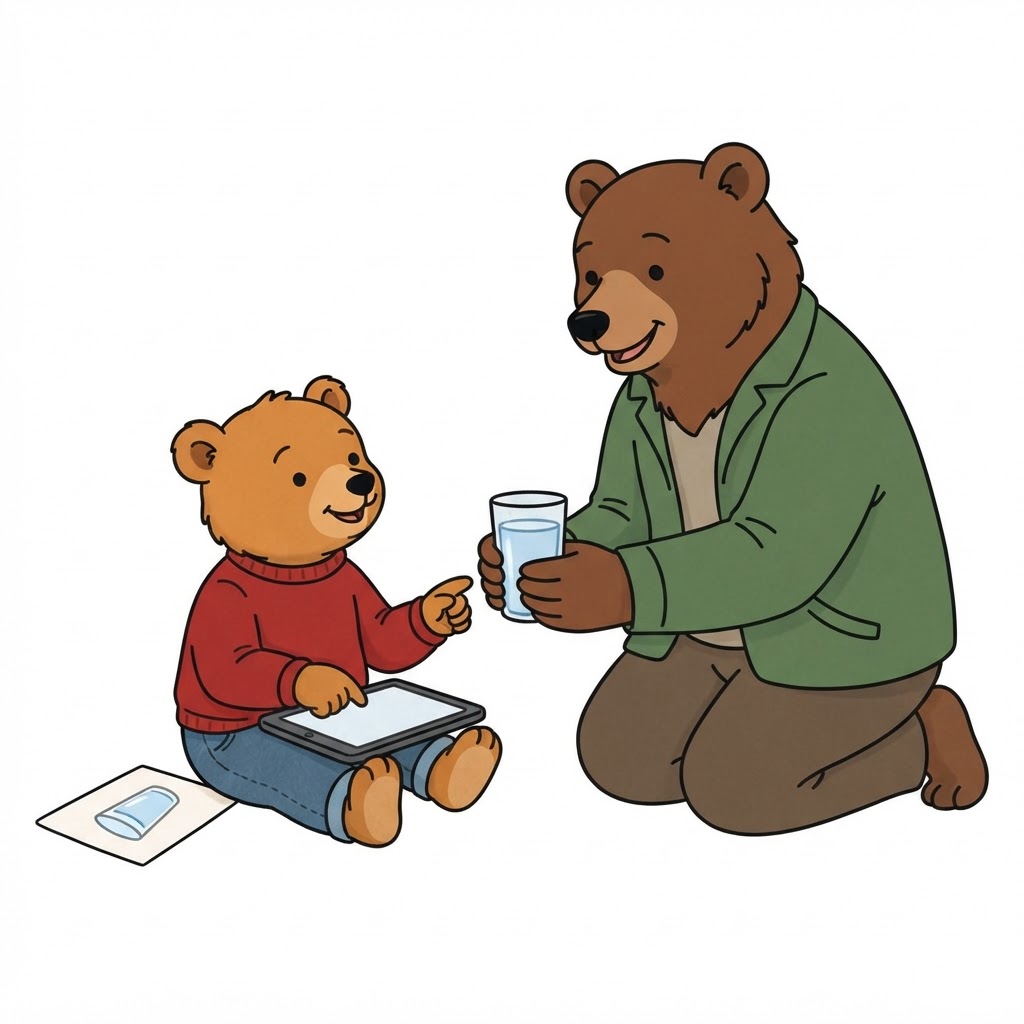
  • Small bear points at a picture card with a glass of water, big bear hands him a glass.

    Every way counts the same

    Spoken words, pointing, a paper card or the device's voice aren't competitors. Under stress, speech often goes first – then a single picture saves the connection.

Key tools

Block 02 · Structure & time

A plan is a safety handrail – not a rigid timetable.

TEACCH and visual schedules give orientation. But once they get too rigid or only hang on the wall at home, they fall away on the go – exactly when your child needs them most.

Read block 2
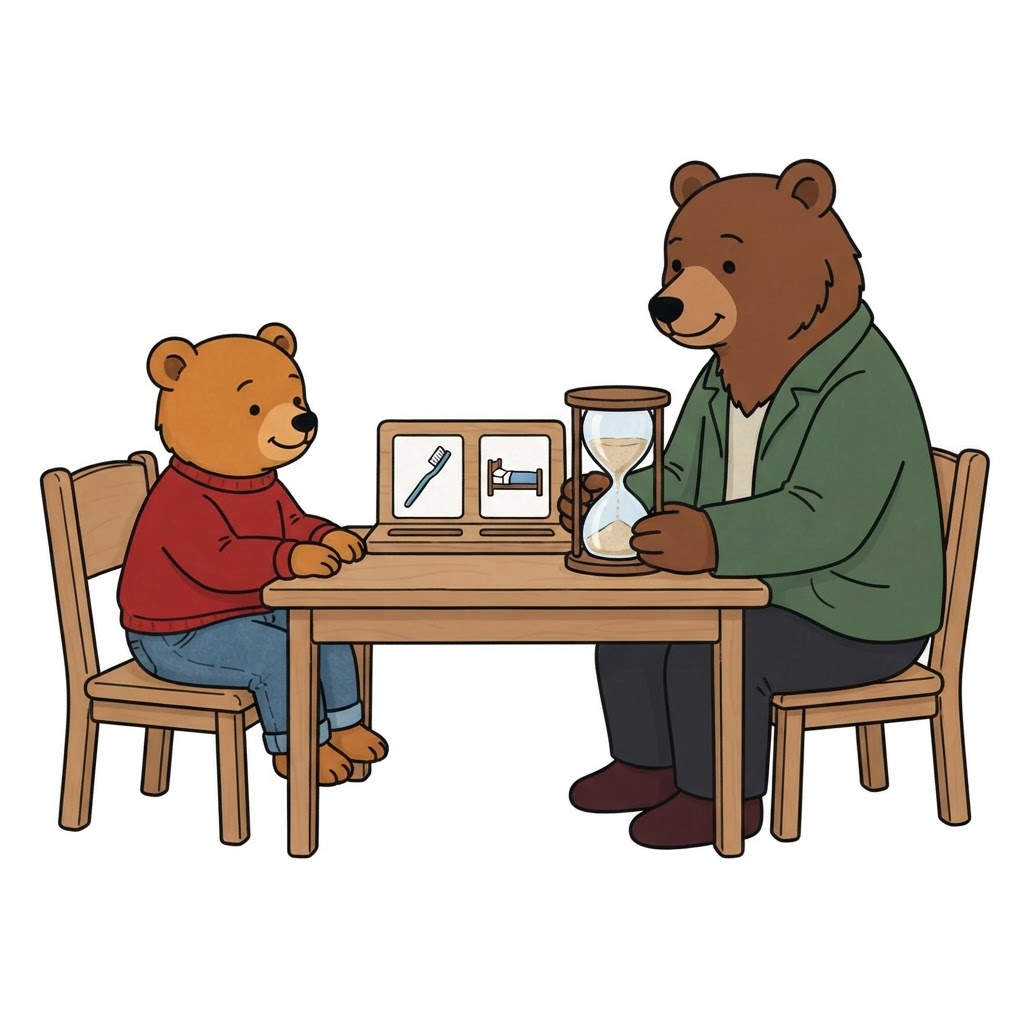
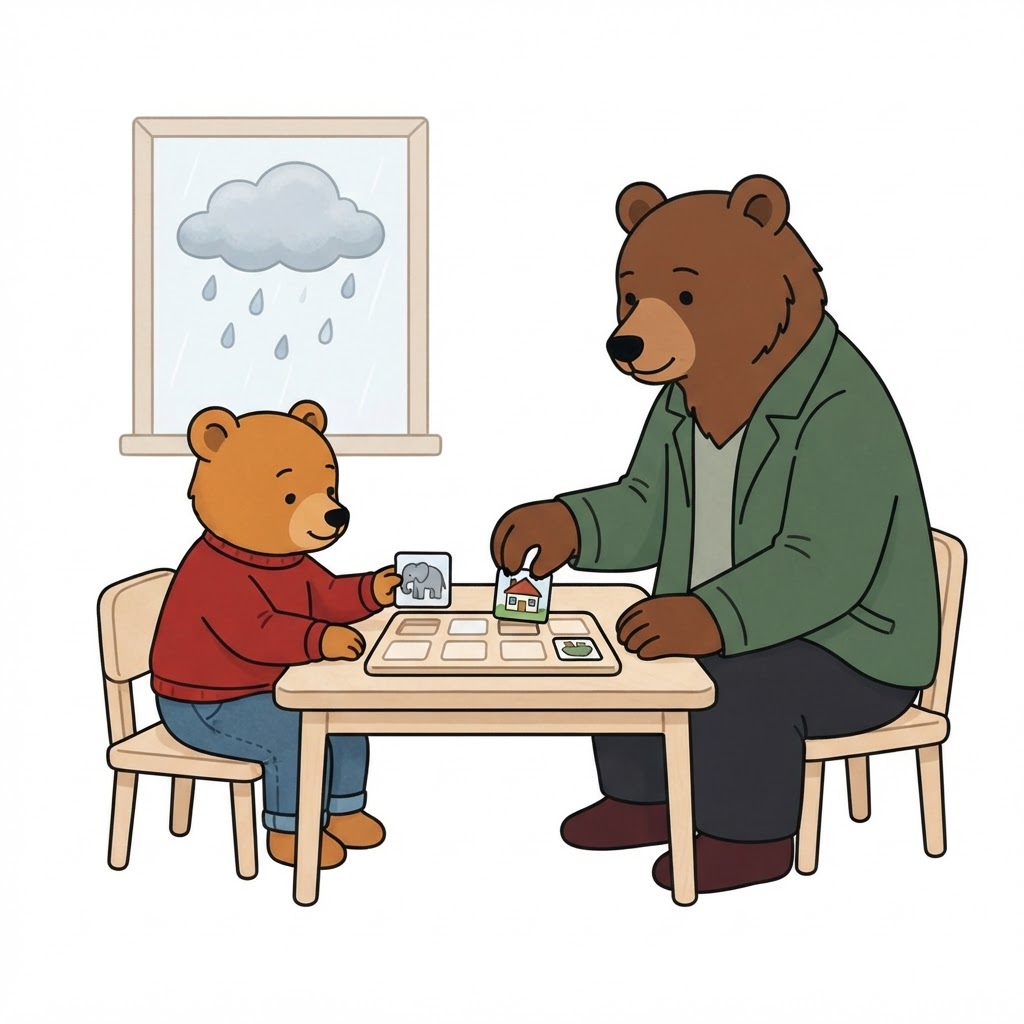
Big and small bear look at two picture cards and a sand timer at the table.
  • What you may already have

    A daily or weekly schedule on the wall and fixed announcements like "5 more minutes".

  • Where it often still sticks

    At the doctor's or on a rainy zoo day, the velcro board is at home. And abstract minutes stay invisible for many autistic children.

  • The connecting principle

    Structure has to be flexible, travel with you and let time shrink visibly for the eyes.

Three small steps for everyday life

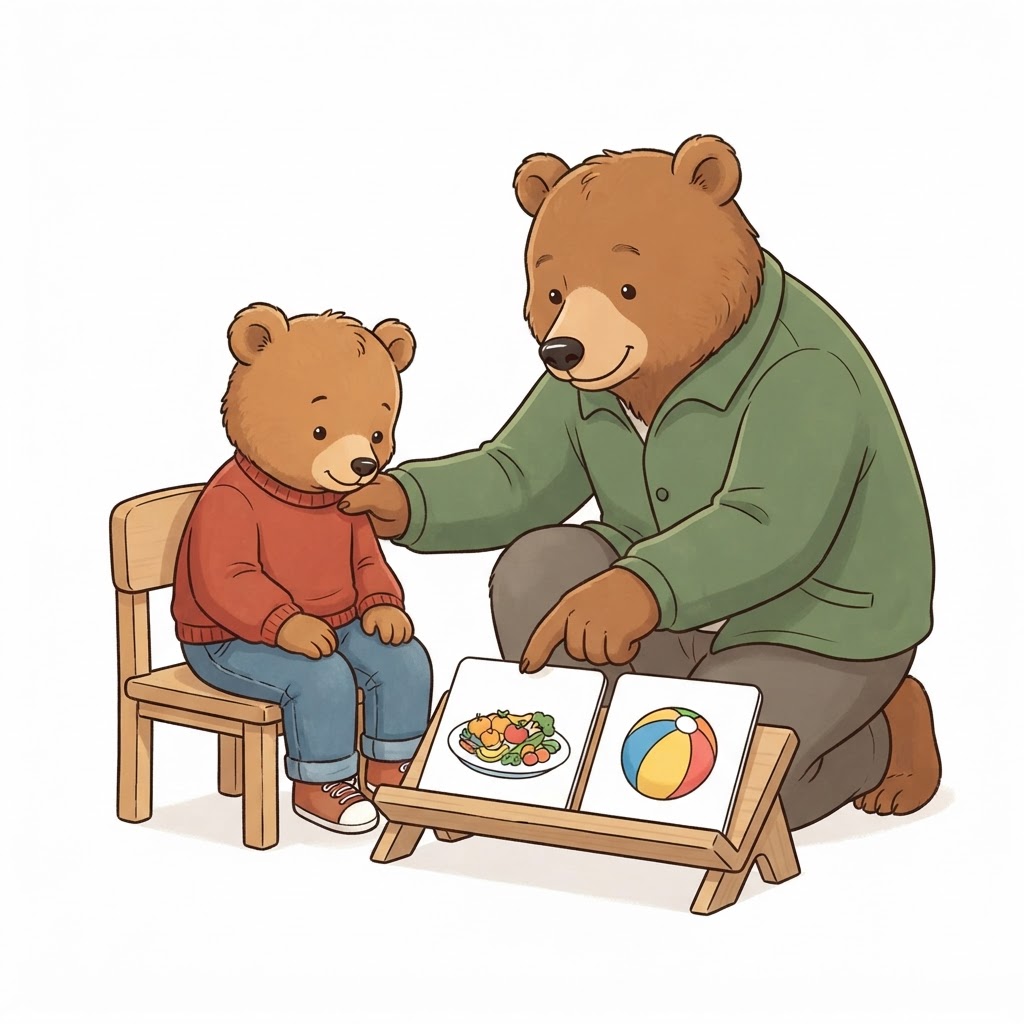
  • A stand with just two picture cards: food, then ball.

    "Now & next" instead of a card wall

    25 velcro cards in a row overwhelm the eye like a huge mountain of duties. Show only what's happening now in large, and calmly beside it the one next step.

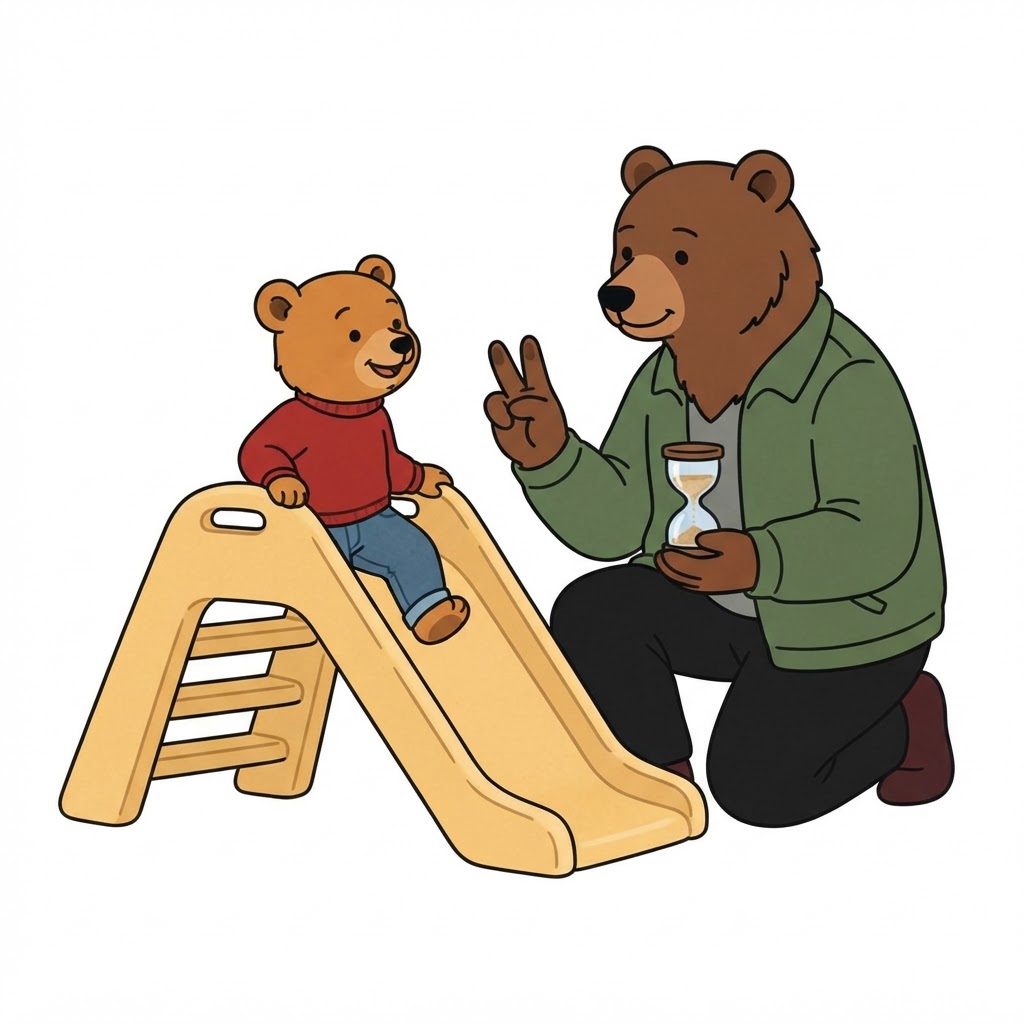
  • Small bear on a slide, big bear shows three fingers and holds a sand timer.

    Amounts and sand timers instead of clock times

    "We leave in 5 minutes" is invisible. "Three more slides" or a running sand timer makes the end predictable for the eyes.

  • Big and small bear swap a card on the plan on a rainy day.

    Change the plan where they can see it

    If an outing is cancelled, don't persuade your child with a hundred words. Swap the card together in front of their eyes beforehand – seeing is often easier than listening.

Key tools

Block 03 · The tide model

Why a child collapses at 3 pm after a "good morning".

School or nursery say "Everything went great!" – and ten minutes after the front door a heavy meltdown breaks out. Planning only appointments but not energy misses the most important calculation of the day.

Read block 3
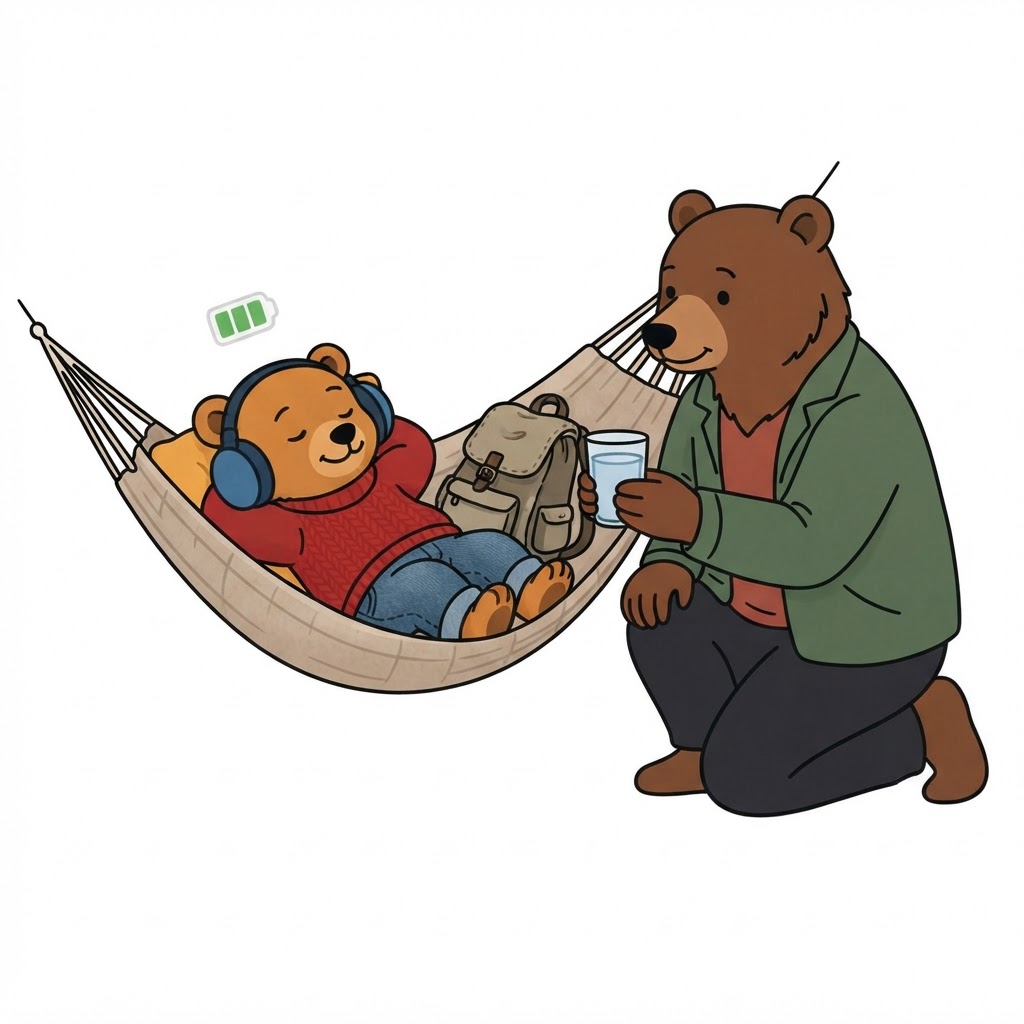
Small bear rests with headphones in a hammock, big bear brings a glass of water.
  • What you may already have

    Fixed routines and the wish to make lovely afternoons, outings or therapies possible.

  • Where it often still sticks

    Meltdowns seem to come "out of nowhere" because quietly holding it together in the morning (masking) and delayed body signals stay invisible.

  • The connecting principle

    Every activity – even huge joy! – costs or gives energy. A good day needs a protected low tide after every high tide.

Three small steps for everyday life

  • Small bear drinks at the table with a snack before moving on.

    Catch the late fuel gauge

    Because hunger, thirst and overload (interoception) are often felt late, drink and rest anchors belong in the plan before exhaustion.

  • After a birthday the small bear rests in a beanbag, the big bear reads quietly.

    A run-out after highlights

    Swimming, a birthday party or grandma's visit are fun and still drain the battery. Afterwards, plan no chores or shopping, but fixed quiet time.

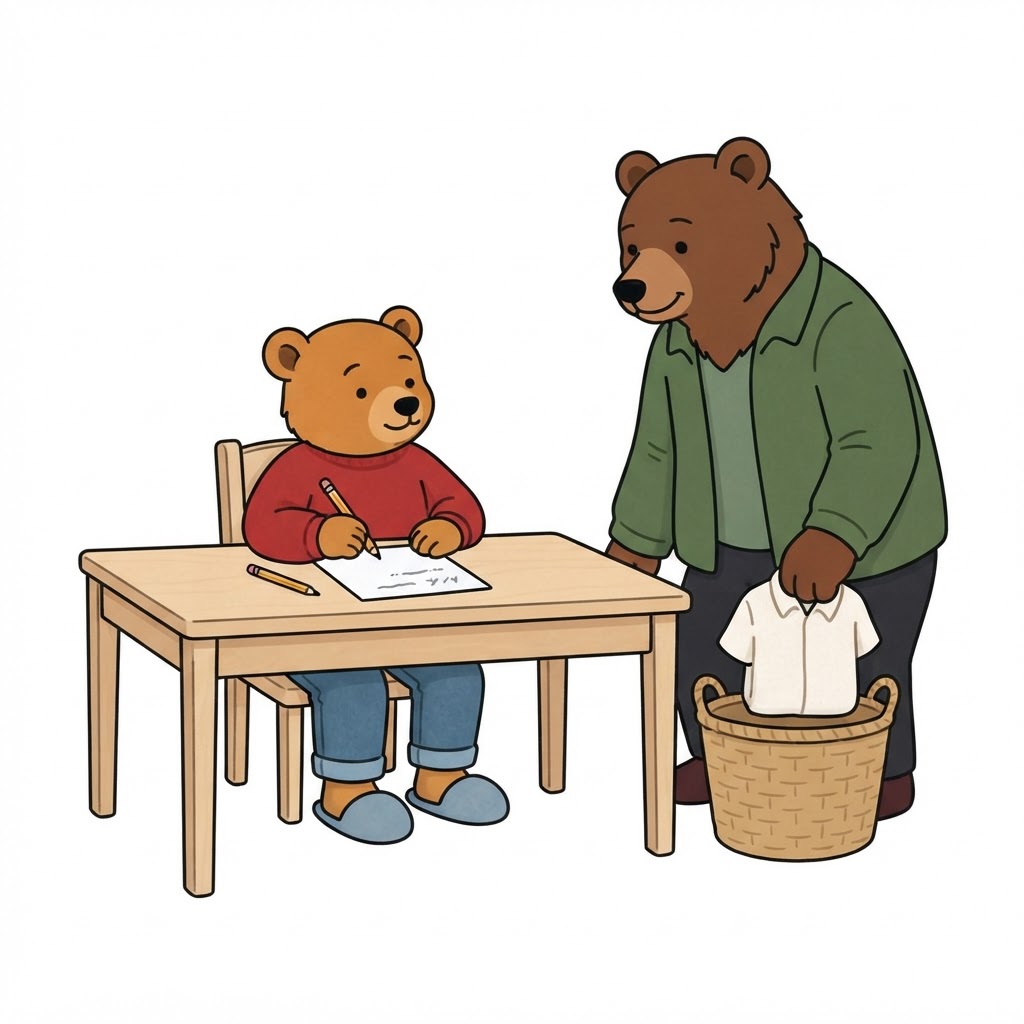
  • Small bear does homework at a tidy table.

    Switch off background drains

    Often it's not the homework that's too hard, but the scratchy label, the humming fridge and the chaos on the table.

The full story of the tide model

How energy, sensory input and recovery work together – with all studies, as an article or as a PDF for school, therapy and family.

Block 04 · Transitions & focus

It's not the task that costs the most – it's the switch in between.

From play to dinner, from tablet to bathroom, from car to house: for a brain in laser focus, every abrupt switch is like an emergency stop on the motorway.

Read block 4
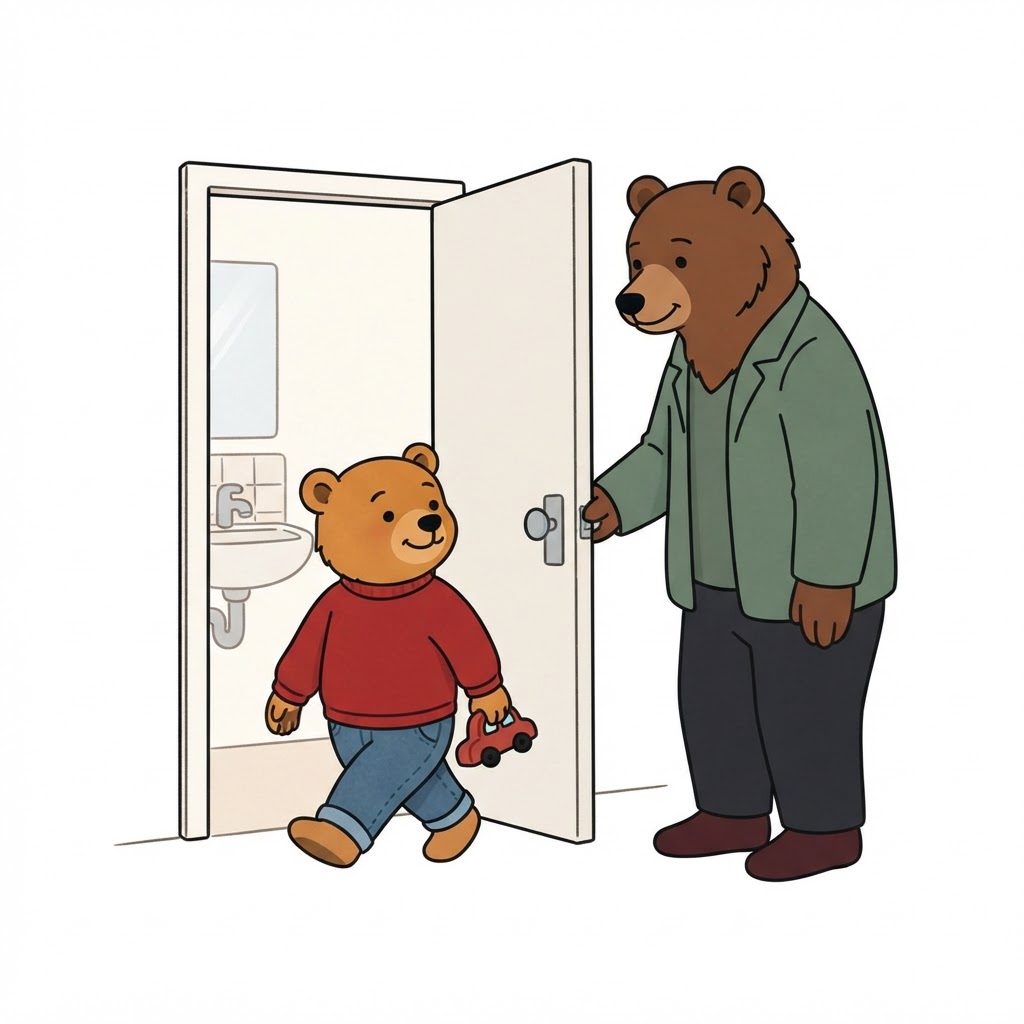
Small bear takes his toy car to the bathroom, big bear holds the door open.
  • What you may already have

    Clear agreements about screen time, brushing teeth or leaving – and still tears every day at exactly these thresholds.

  • Where it often still sticks

    Calls from the next room bounce off the focus tunnel, and "Stop right now!" is very hard for a brain that is fully inside one thing.

  • The connecting principle

    Treat every transition as a small activity of its own with a few minutes of braking distance, not as an empty second.

Three small steps for everyday life

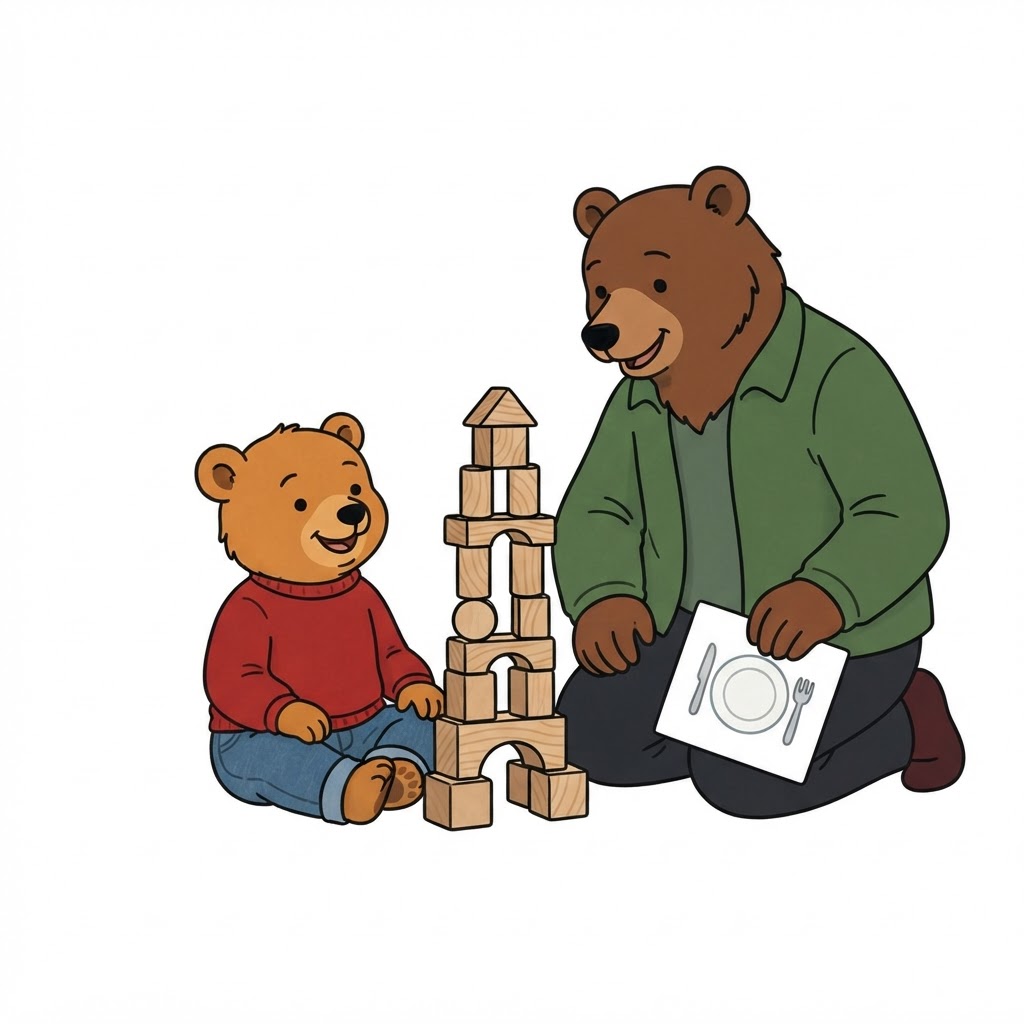
  • Big bear admires the small bear's block tower.

    Join in briefly, then switch

    Go to your child, look honestly at the build or level for a moment ("That bridge got huge!") and only then silently place the next card in view.

  • Small bear brushes his teeth, a toy dino watches from the sink.

    Bring a bridge object

    The favourite figure may come along to brushing teeth and "watch" from the edge of the sink. That way the thread doesn't snap.

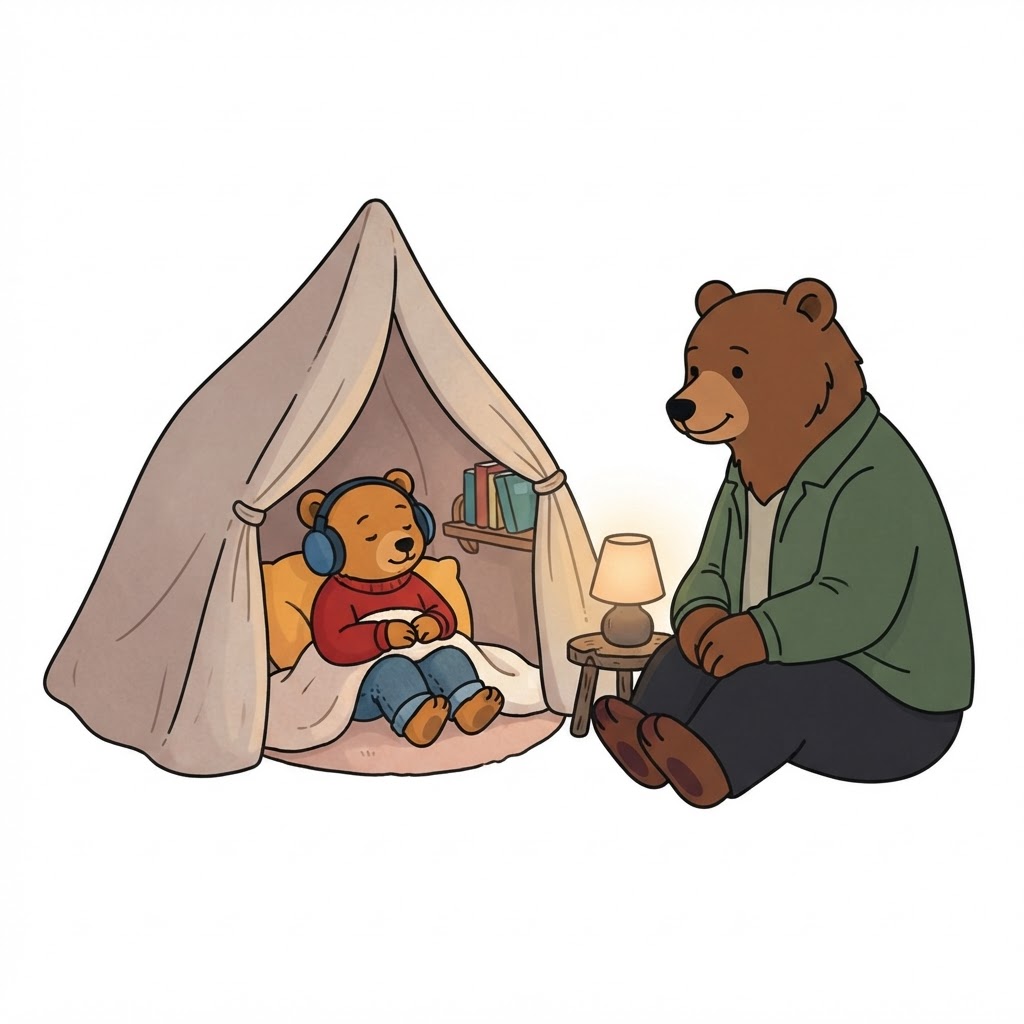
  • Small bear sits safely in a tent, big bear waits calmly nearby.

    A safe space, not a lecture, in the storm

    If it still tips into a meltdown, language is usually out of reach. No consequences, no questions – just dim the input, keep your distance and stay calmly present.

Key tools

Block 05 · Family & surroundings

Your home is a place to live – not a therapy centre.

In the long run no toolkit in the world helps if parents burn out organising, siblings become invisible and every visit to relatives ends in justifying yourselves.

Read block 5
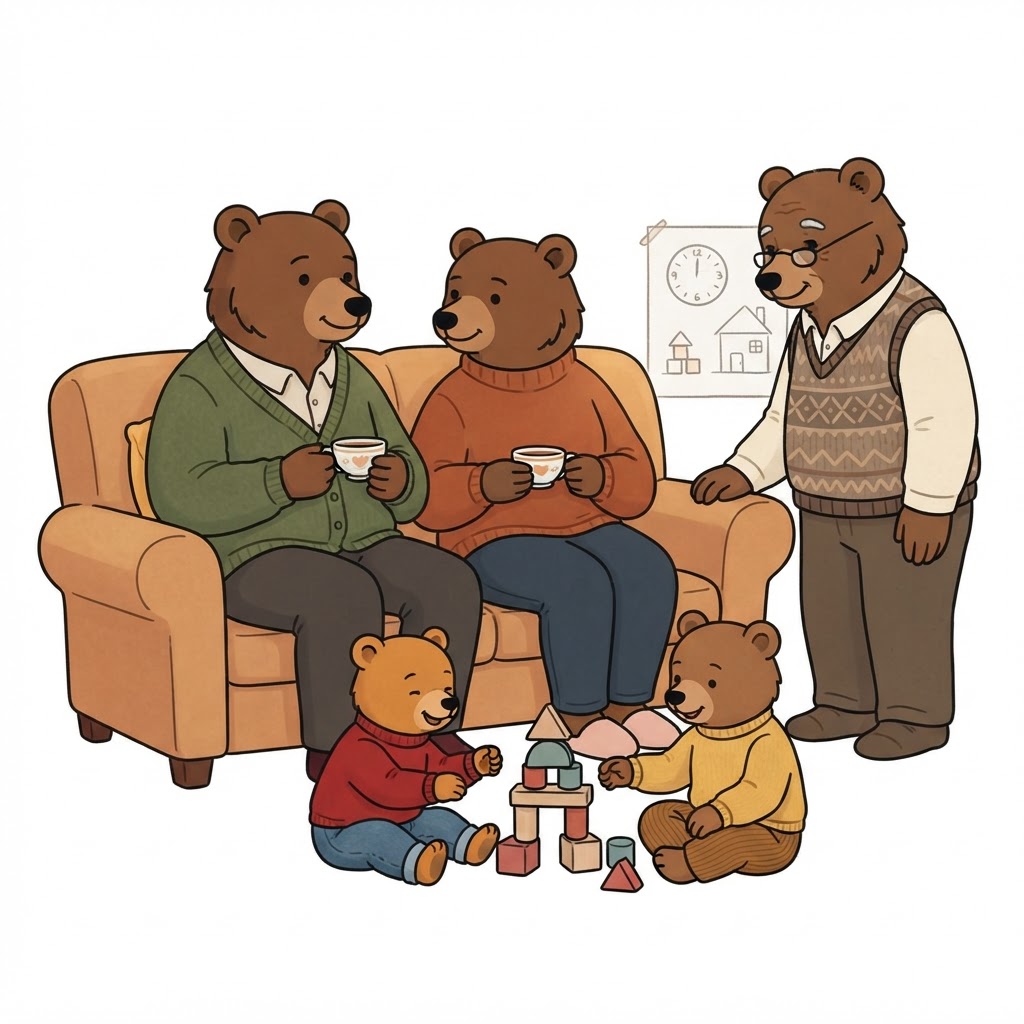
Bear parents drink tea on the sofa, grandpa bear looks at the day plan, two bear children play with blocks.
  • What you may already have

    A care level, therapies, a school assistant – and the feeling that you only function as your child's therapist and lawyer.

  • Where it often still sticks

    Support budgets expire unused, siblings always have to be "sensible", and grandma or school don't pull in the same direction because they're missing the why.

  • The connecting principle

    A system that holds also protects the parents' batteries, gives siblings their own islands and brings grandparents on board through the same picture language.

Three small steps for everyday life

  • A carer plays with the small bear, the big bear waves and leaves for a walk.

    Use respite budgets without guilt

    In Germany, the relief allowance (€131 a month) and, from care level 2, the combined annual amount for respite and short-term care (over €3,500 a year) exist exactly to give you real breathing space with familiar care.

  • Big bear hands grandma a card, picture cards hang on the fridge.

    Knowledge cards instead of justifying

    When relatives want to debate safe foods or headphones, step out of the line of fire: pass on the fridge knowledge cards from our picture cards and let all caregivers use the same plan.

  • Big bear eats ice cream with the older sibling on a park bench.

    Protected sibling islands

    Siblings need small fixed times each week where nothing is about diagnoses, consideration or therapies – only about them.

Elija in the back seat of the car, using Elija OS on the iPad
Featured on Ellas Blog
“At its core, it's about a human being with their own needs – and a right to self-determination and inclusion.”

— Silke Bauerfeind, Founder of Ellas Blog (in the interview on Elija OS)

Read the interview & see our daily life photos

Frequent questions from experienced parents

One plan everyone sees – child, parents, grandma and school.

Elija OS connects picture cards, AAC, sand timer and an energy view in one calm day plan. See what that looks like in everyday life.