Guide · PDA & autism

PDA in autism: when every “you must” triggers panic.

Why some autistic children refuse even things they love – why reward charts and punishment make it worse, and how your days can calm down through safety and a real say.

Read on
A big bear crouches on a rug and lays out two picture cards to choose from; a small bear in a red sweater watches curiously from a little distance.

What is PDA?

Why well-meant advice backfires with PDA.

PDA originally stood for Pathological Demand Avoidance – extreme avoidance of demands. Many autistic people and professionals now prefer Pervasive Drive for Autonomy: a deep need for autonomy. Both describe the same profile within the autism spectrum.

What is often recommended

Direct instructions like “Put your shoes on now!”. Point charts, star boards and if-then deals. Rigid schedules with no way out. Following through on consequences “so the child learns limits”.With PDA: loss-of-control alarm, anger, flight or complete freezing.

What really helps with PDA

Inviting, indirect language instead of commands. Real small choices and a permitted “pause” or “later”. A flexible plan as a neutral third party instead of Mum or Dad as the driver. Demands that match the nervous system's current capacity.With PDA: the alarm system calms down – cooperation becomes possible again.

Alex carrying Elija on his shoulders in the forest

A letter from Alex, Elija's father

When a single sentence blows up the whole morning.

Maybe you know this moment: everything is peaceful, you are about to leave for a lovely outing – and as soon as you say the harmless sentence “Could you quickly use the toilet and put your jacket on?”, everything explodes out of nowhere.

Parents then often hear advice that hurts: “You just need to be more consistent!” But the more firmly you insist, the more desperately your child resists – sometimes with tears and anger, sometimes with endless arguing, distraction or suddenly floppy legs.

When I came across the research on PDA – Pathological Demand Avoidance, today often more aptly called Pervasive Drive for Autonomy –, it changed how I saw everything: in that moment your child is not fighting you, but a feeling of losing control.

Once you understand that, you stop fighting power struggles that only hurt both sides. On this page we show you what happens in the brain – and which language bridges and tools take the pressure out of your day.


With all our heart, Alex and family

Chapter 01 · What happens in the brain

Not defiance, not manipulation: it is a real protective reflex.

With PDA the alarm system fires at everyday expectations. Even hunger, needing the toilet or a favourite game can block once pressure builds.

Read chapter 1
A big bear sits protectively next to a small bear; a heavy backpack lies set down on the floor in front of them.

Study in focus · O’Nions et al. (2021)

Why rewards and punishment fizzle out with PDA.

O'Nions et al. (2021) · Advances in Neurodevelopmental Disorders

Elizabeth O'Nions and colleagues refined a caregiver questionnaire on extreme demand avoidance in autistic children. Our summary: the child is not naughty or disrespectful – everyday demands trigger a strong sense of losing control and stress. Even a promised star is felt as outside control. Classic reward and punishment are therefore not the right tool.

Three things parents should know about the PDA brain

01 · Demand alarm

Even nice things can block.

As soon as something feels like an expectation, the brain can shut down.

Avoidance with PDA is not only about disliked chores like tidying up. Even praise, a favourite meal or a planned zoo visit can turn into a demand. Some children even push away body signals like hunger or needing the toilet.

02 · Neuroception

Fight, flight or freeze.

When the inner danger radar reports loss of control, the nervous system switches within seconds.

Porges calls this unconscious scanning for danger neuroception. Some children fight, others flee or freeze – “my legs don't work any more”. Many parents also see distraction, role play or endless negotiating as a way out.

03 · The battery counts

The emptier the battery, the lower the tolerance.

After a school morning full of masking, even “How was your day?” can be too much at home.

Demand tolerance is not a fixed trait; it changes through the day. Raymaker and colleagues describe how constant adapting to a non-autistic world leads to exhaustion. What works on rested days may be impossible on exhausted ones.

Chapter 02 · Language & support

Invite instead of instruct: how small changes in wording open doors.

You don't have to throw every boundary overboard. Often the wrapping of a sentence alone decides whether your child hears danger or safety.

Read chapter 2
Big and small bear sit side by side at eye level and look curiously at a wooden snail.

The everyday translator

Direct or inviting: five everyday moments – with and without words.

Important: pressure-free support looks completely different depending on language understanding. While verbally fluent children respond to indirect, curious sentences, non-speaking children (or any child in acute sensory stress) mainly need quiet: even many spoken words are a demand. Here it's not the sentence that invites – it's the prepared environment and the visible picture.

  • Eating

    Instead of“Come to the table now and eat!” (or following with the spoon)

    Try · Zero demand in the roomWithout a word, place a bowl of familiar pasta (safe food) within reach on the table, sit down relaxed and eat yourself – no calling, no forced eye contact.

    No social pressure – their own impulse gets to decide.

  • Shoes & going out

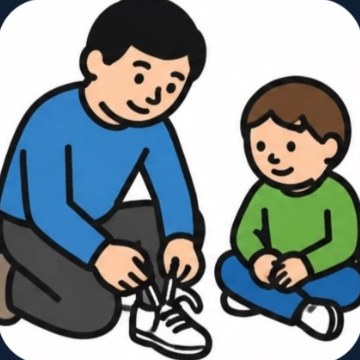
    Instead of“Put your shoes on, we have to go!”

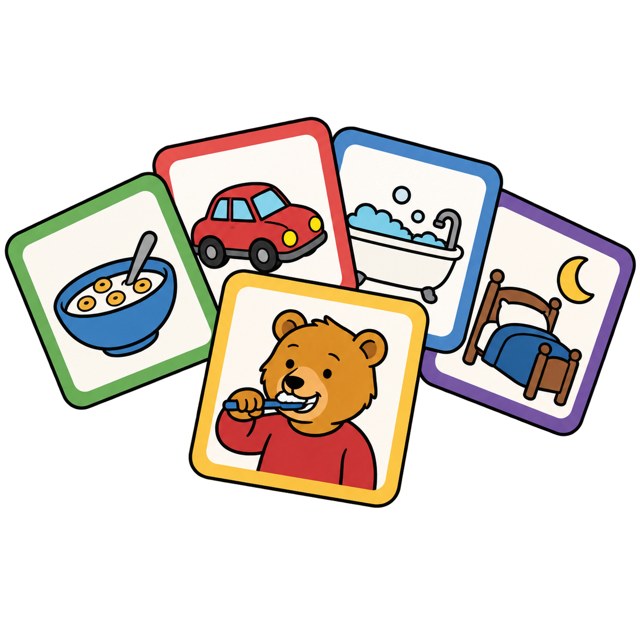
    Try · Lay a visible trailSilently place the shoes open in the hall, calmly lay the “Car ride” card (or a familiar transition object) next to them and put on your own jacket without comment.

    The action explains itself through the eyes, with no language-processing stress.

  • Brushing teeth

    Instead of“Open up, we're brushing teeth now!”

    Try · Silent choice & joining inPut out two different toothbrushes (e.g. red & blue) and first calmly brush your own teeth in front of the mirror – until your child reaches for a brush on their own.

    Co-regulation and imitation instead of physical intrusion.

  • Tidying up

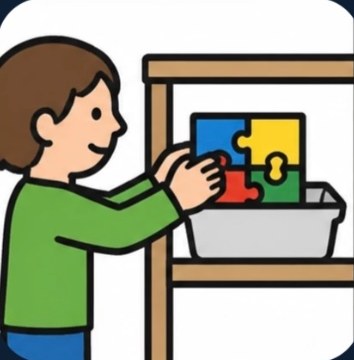
    Instead of“Put the blocks in the box!”

    Try · Rhythm instead of a taskWithout saying a word, slowly drop two or three blocks into the box with a calm clack – and fully accept it if your child only watches today.

    Gently invites attention without asking for anything in return.

  • Screen & transition

    Instead of“Tablet off, that's enough!” (or taking the device away)

    Try · Pull instead of cut-offQuietly place the silent sand timer in view and audibly start running the bath next door or lay out the favourite toy – the tablet calmly shows the next picture.

    An attractive next anchor gently draws attention away instead of a hard stop.

Four pillars for lower-pressure days

  • The plan as a neutral third party

    When Mum or Dad remind ten times, the relationship becomes a battlefield. If a plan or a card shows the next step, the information is not a personal command – you stand on the same side. Especially for non-speaking children, the calm picture on the plan replaces a hundred overwhelming words – and with the talker tile “Pause” or the soft no, the child can answer self-determinedly without speech.

  • Choose your battles

    Ask yourself at every resistance: Is this about safety and health – or just habit? Shoes on at the destination, breakfast on the floor: every demand you skip saves energy for what really matters.

  • A permitted “pause” and “later”

    Knowing there is an emergency exit stops you feeling trapped. If your child may gently decline a card, pause, or park it as a wish for later, the pressure drops noticeably.

  • Warnings without a ticking bomb

    Beeping kitchen timers put many children under even more pressure. Silent sand timers or tangible amounts like “after this episode” make time visible without rushing.

Chapter 03 · School, crises & tools

When school, nursery or grandparents demand “more discipline”.

At home you have found your way – but outside your child often meets systems built on obedience. How to protect your child and which tools help right away.

Read chapter 3
Big bear, small bear and a teacher bear with glasses look together at a picture plan with a calm-island card.

School, family and the time after the storm

  • When school suddenly doesn't work

    School avoidance with PDA is almost never laziness, but overload. Pressure deepens the block. What can help: a fixed break pass in class, reduced homework through formal adjustments, a school assistant and close contact with child psychiatry or an autism centre.

  • Explaining it to grandparents and teachers

    Don't argue about parenting styles. Hand over a factual one-page profile, ideally with the study summary: “Direct instructions put our child into alarm stress – short choices and lead time open up cooperation.”

  • After the storm: reconnect without a lecture

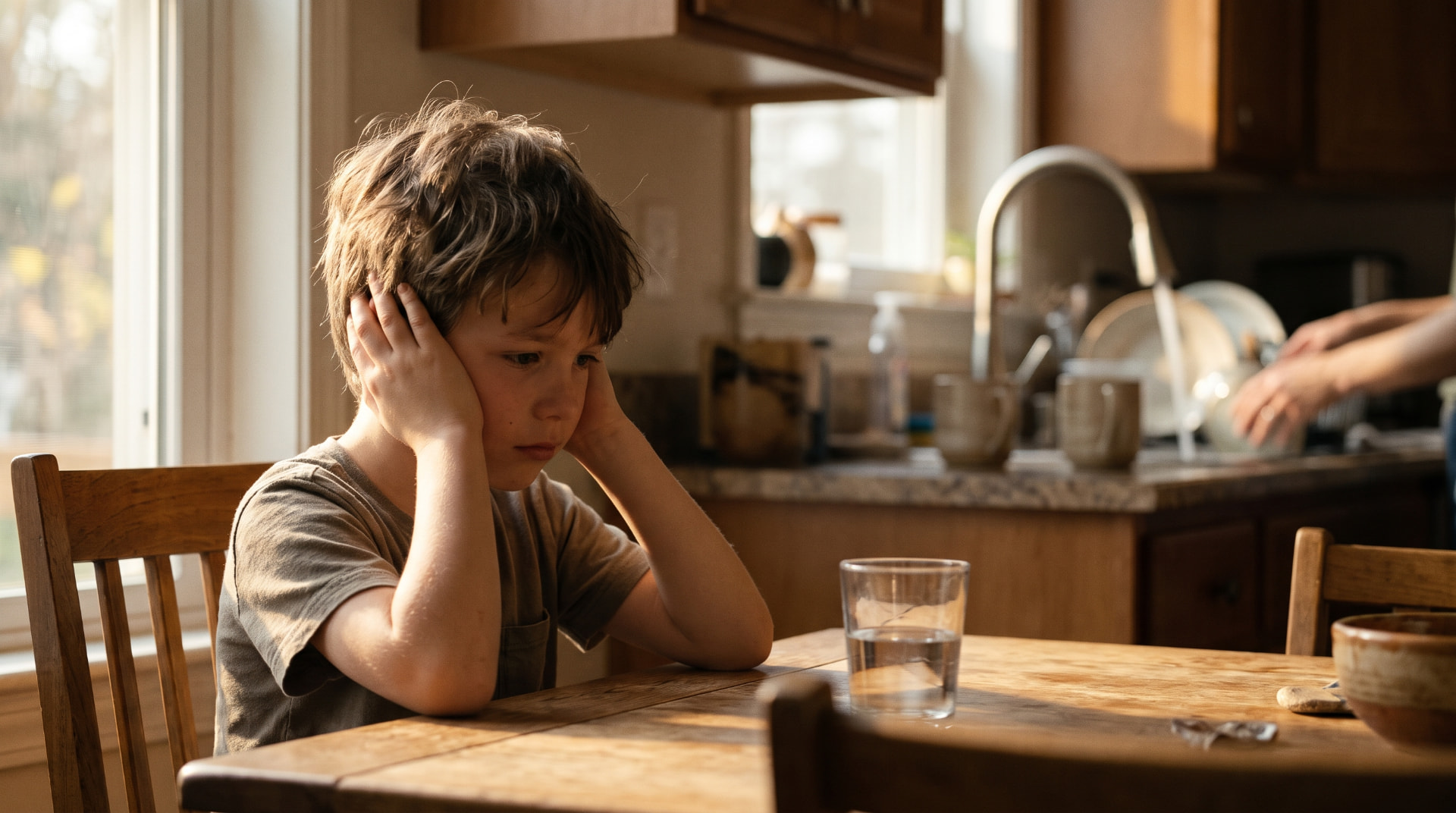
    Many children feel ashamed after a meltdown – and “Say sorry!” is immediately the next demand. Reconnect without words instead: a glass of water, a familiar favourite topic and the signal “we're okay”.

Elija in the back seat of the car, using Elija OS on the iPad
Featured on Ellas Blog
“At its core, it's about a human being with their own needs – and a right to self-determination and inclusion.”

— Silke Bauerfeind, Founder of Ellas Blog (in the interview on Elija OS)

Read the interview & see our daily life photos

Common questions about PDA in autism

A plan that invites instead of instructs.

Elija OS connects picture cards, AAC, sand timer and a soft no in one calm daily plan. See how it feels in everyday life.