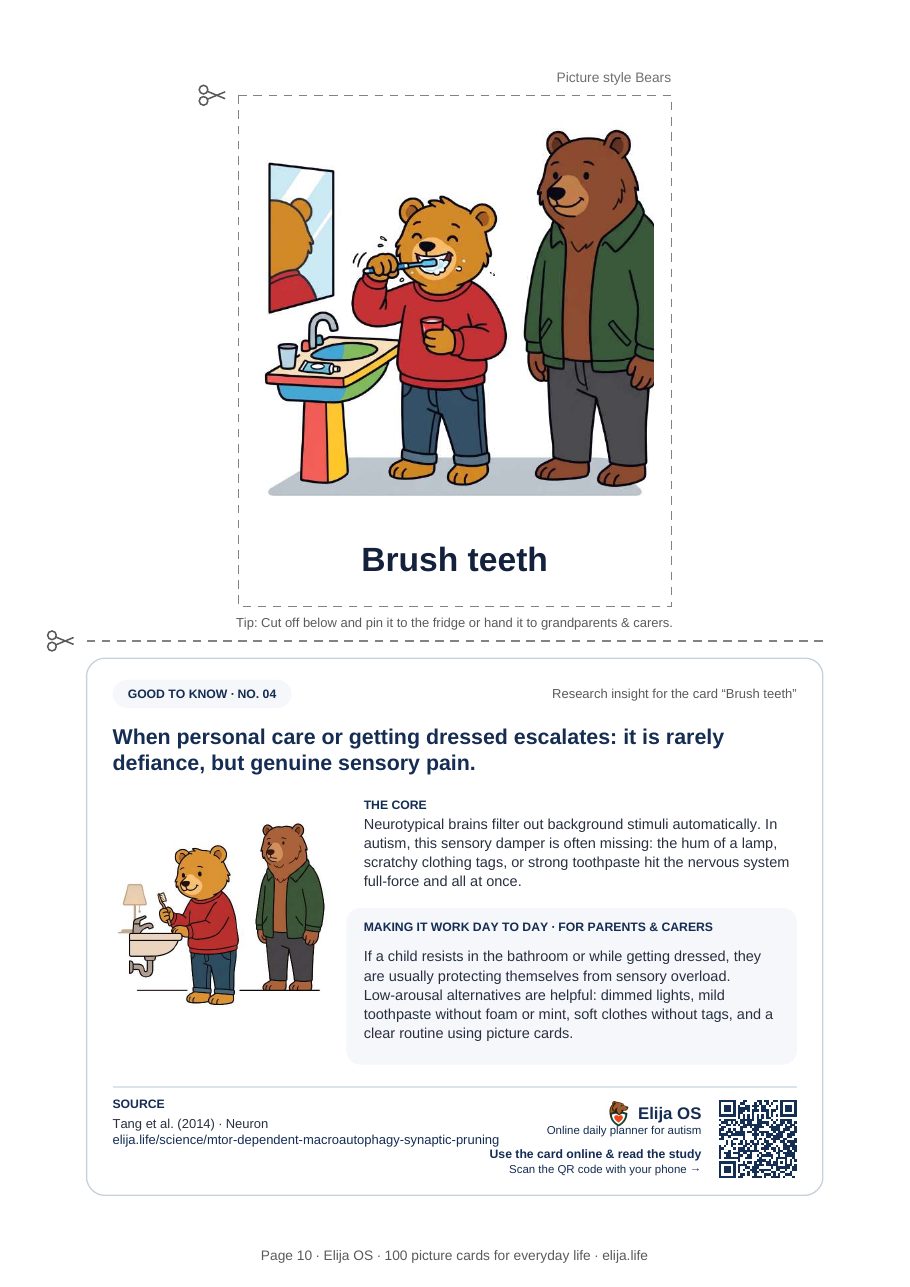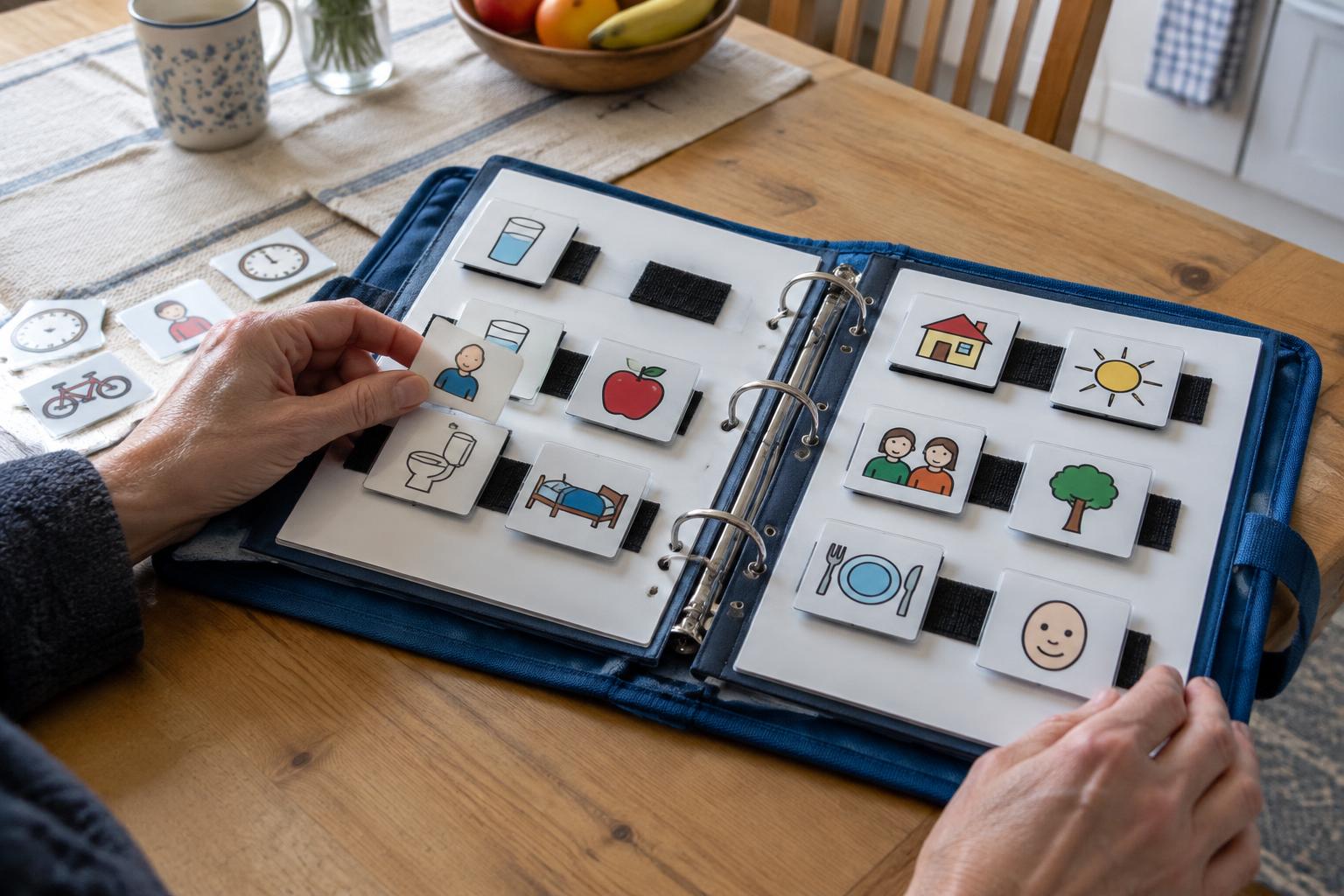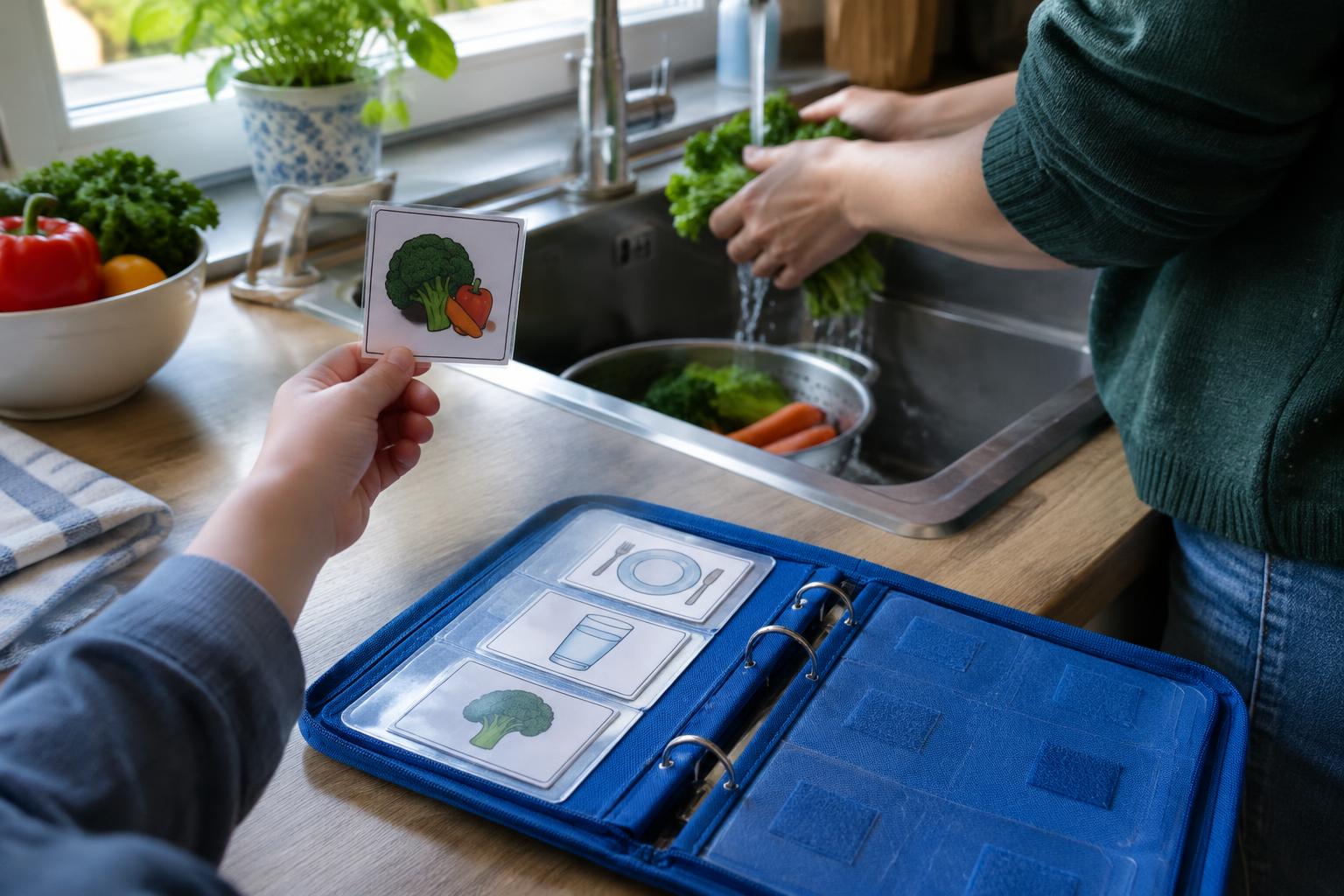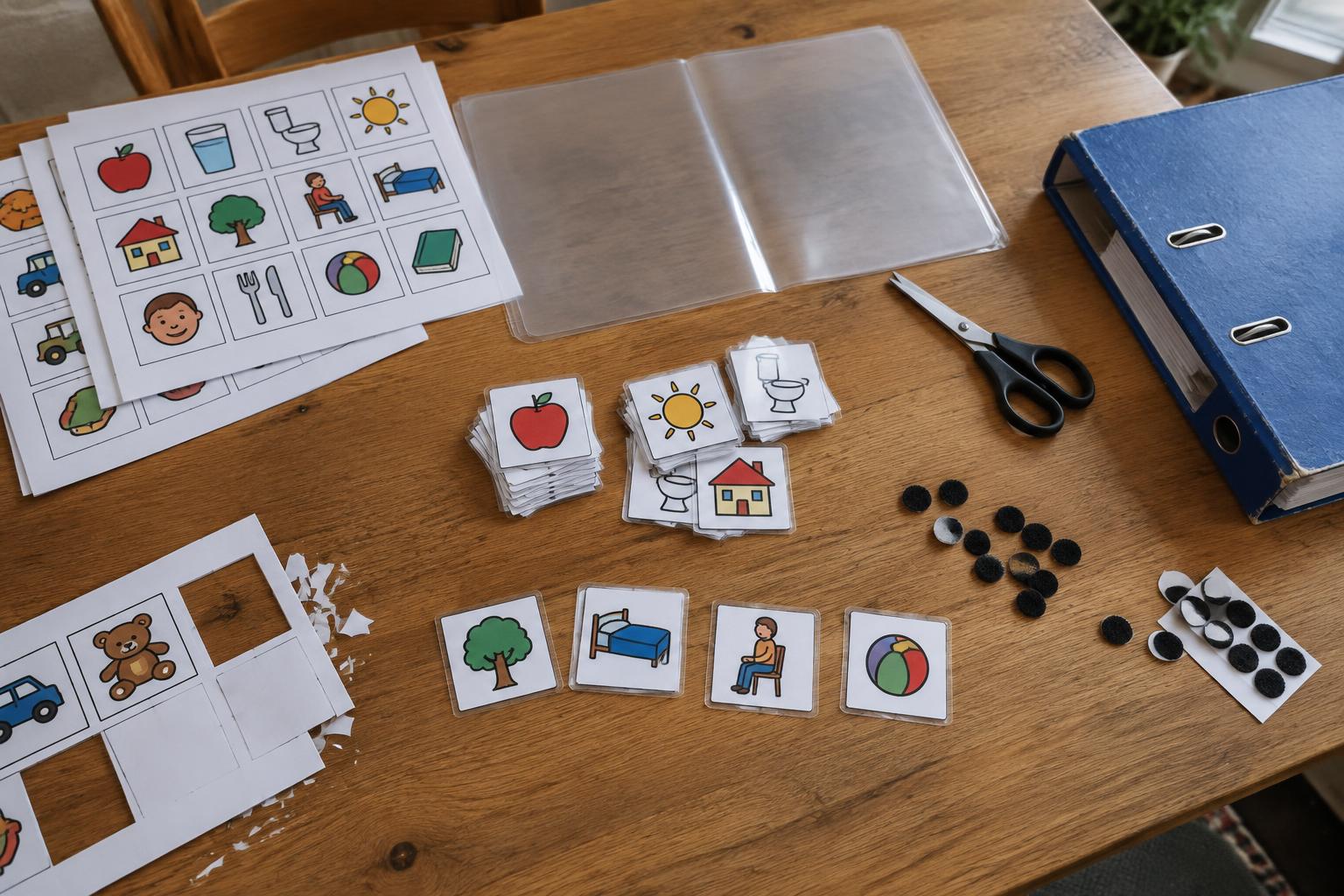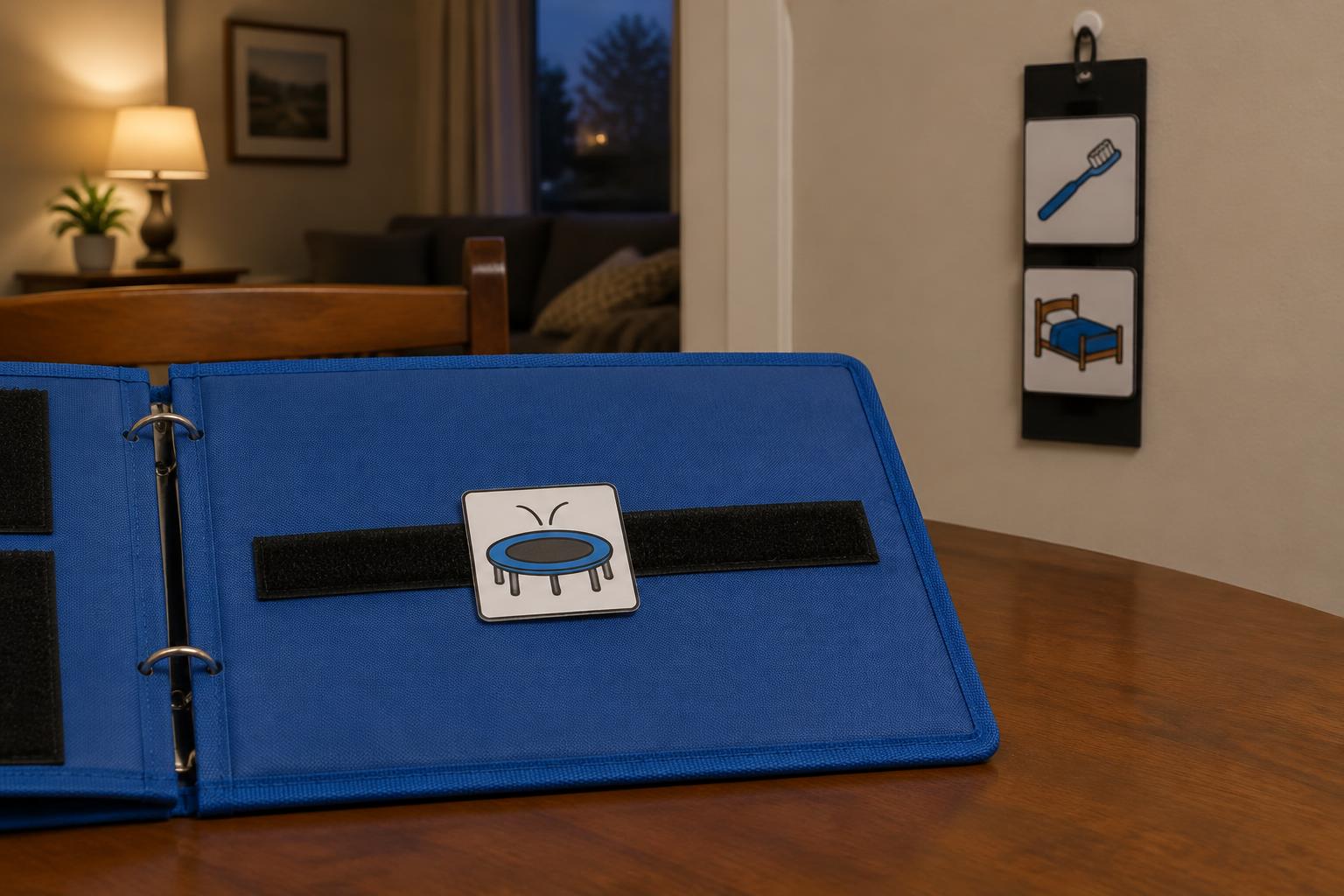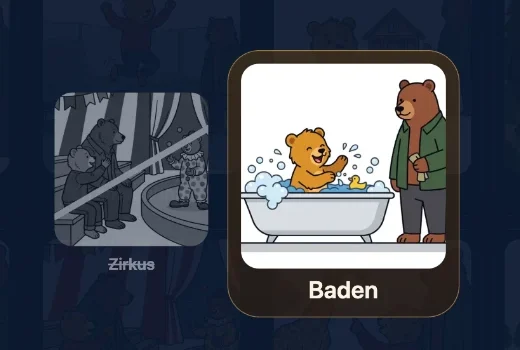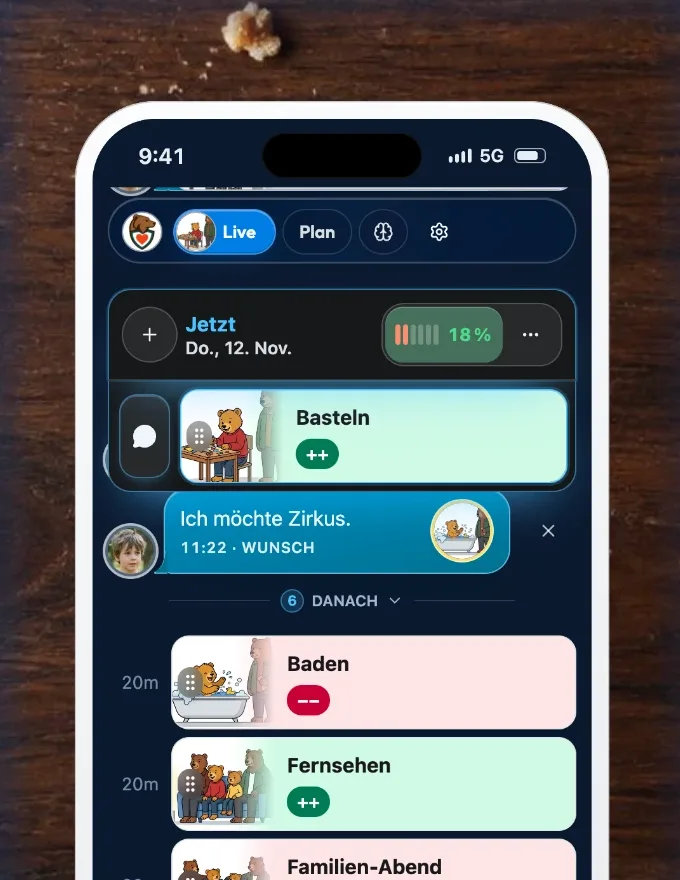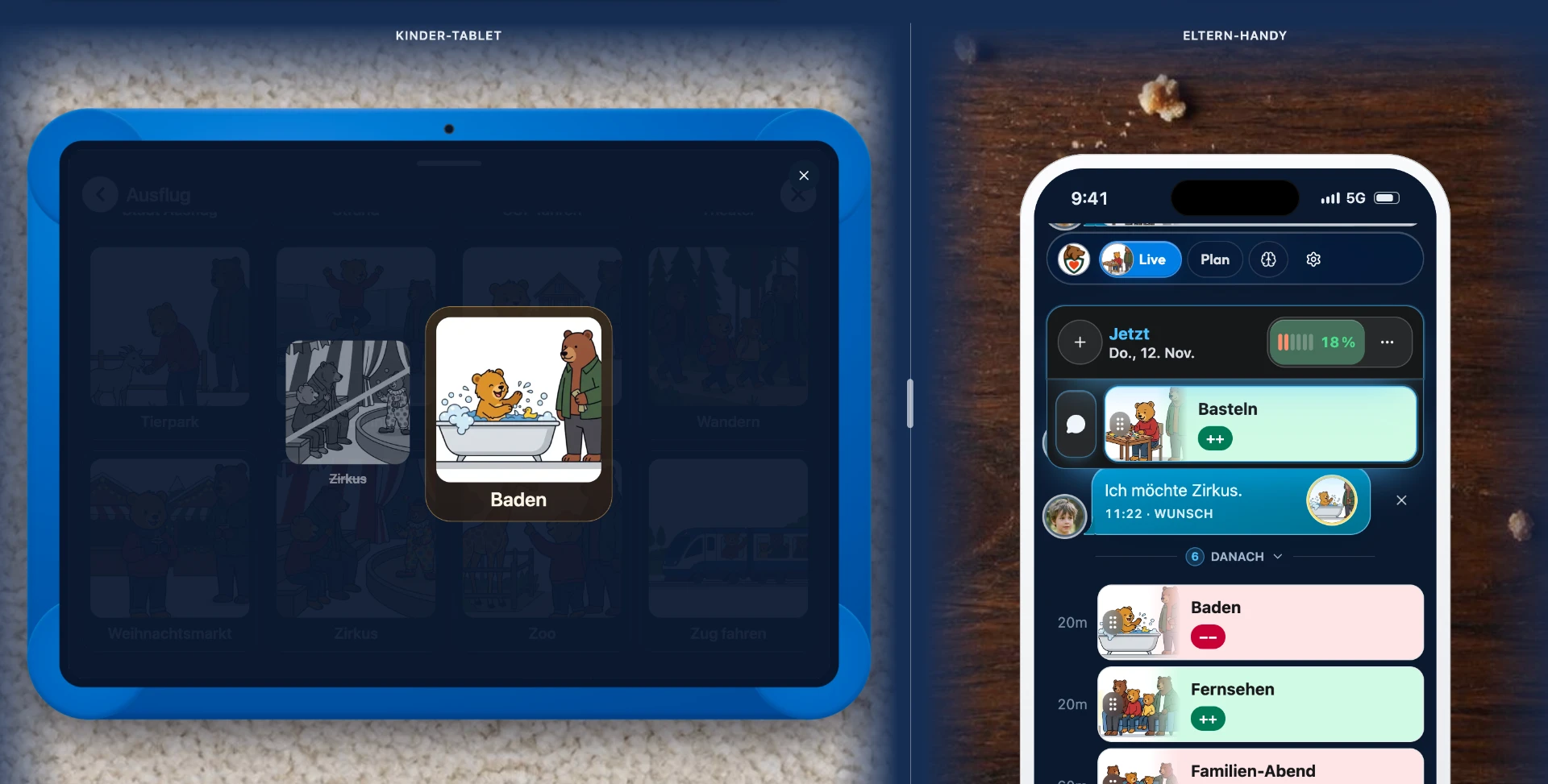



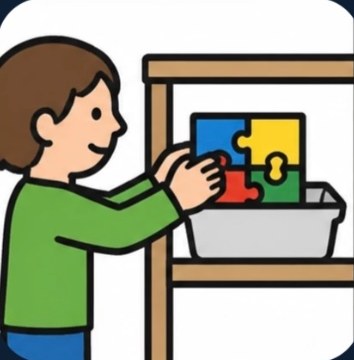







With paper cards
Touch, choose, exchange. Familiar, tangible and battery-free. The right card needs to be within reach; new pictures take a printer, scissors and time.
AAC · Picture cards with a voice
When the Velcro binder meets its everyday limits: Elija OS connects a talker, daily schedule and family chat. Paper can stay. A digital voice joins in.
Not either or
PECS is a structured way of teaching communication through picture exchange – not simply a name for Velcro cards. Elija OS is not digital PECS training; it is a talker connected to a daily schedule. Explore what suits your child with your AAC professional.
With paper cards
Touch, choose, exchange. Familiar, tangible and battery-free. The right card needs to be within reach; new pictures take a printer, scissors and time.
With Elija OS
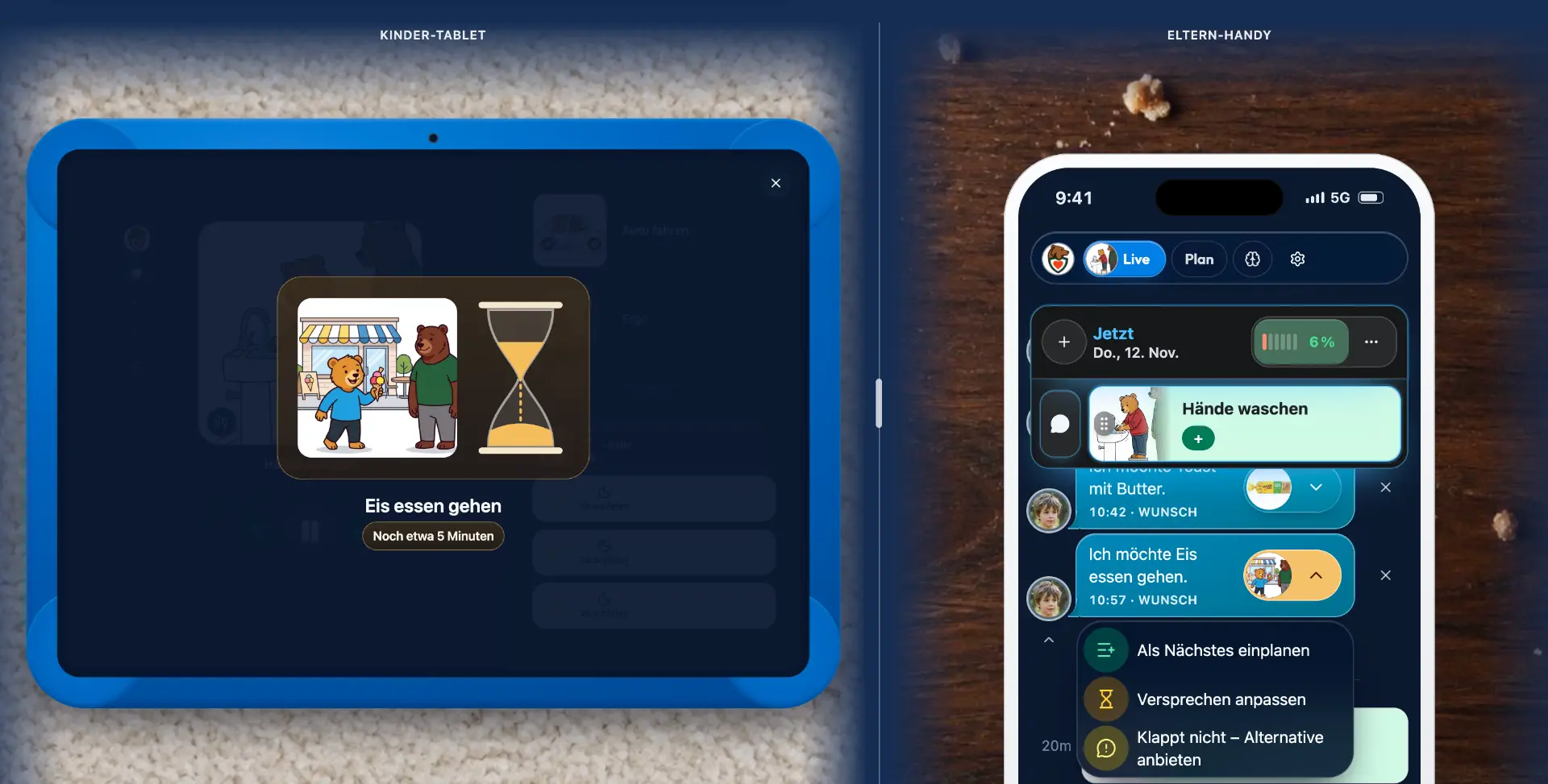
Tap and hear. A wish also reaches your phone. Reply with a visible response – without rearranging a separate paper schedule.
Recognise these moments?
The very card you need is missing.
From a picture to a conversation
Your child taps a picture tile. The talker speaks the phrase and the message appears in family chat. Help, discomfort and saying no belong here too – not just requests for things. Parents stay available and decide what happens next.
Wishes stay visible
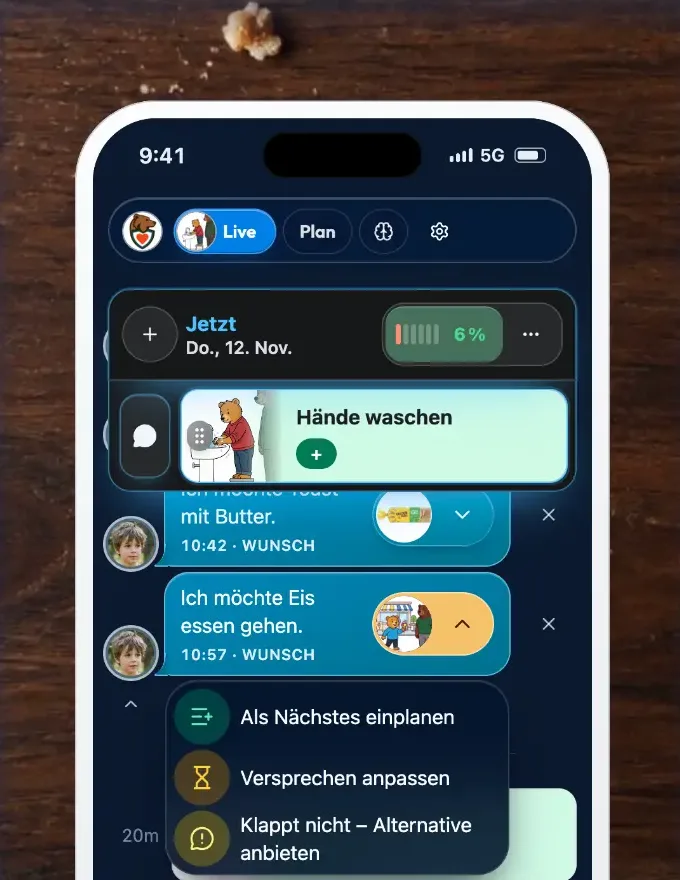
A trampoline wish can remain valid even when it cannot happen now. You prepare a suitable response: an alternative, a pause or a later date. The talker shows it when your child taps the wish.
You prepare the response. Your child sees it when tapping – without losing their wish.
Make waiting visible
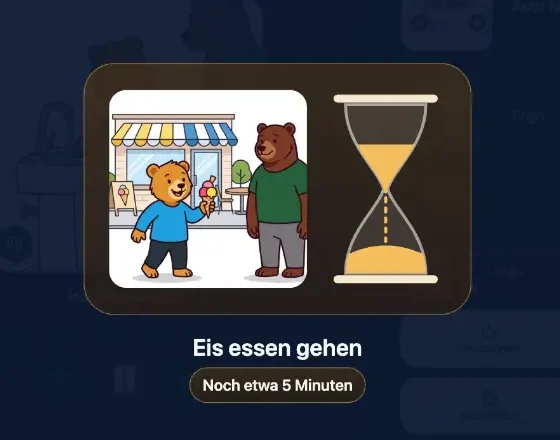
When waiting is hard, an hourglass can show the agreed time. You set it; your child sees the sand move. It offers orientation, not a promise of a conflict-free transition.
An hourglass can support waiting. It replaces neither your presence nor a suitable break.
Context, not miracle promises
These three papers provide perspectives on attention, planning and mutual understanding. They neither compare Elija OS with PECS nor prove that digital is better.
Hill (2004) reviews findings on executive functions in autism. We draw a design goal from this: clear choices and reliable routines. This is not evidence of our app’s effectiveness.
Milton (2012) describes the “Double Empathy Problem”: misunderstandings can arise between different lived experiences. For us, saying no, asking for help and requesting breaks all deserve a response.
Murray, Lesser and Lawson (2005) propose monotropism as a model of attention. We take this as a prompt to keep communication within reach, even when your child is deeply absorbed.
A talker gives picture symbols an audible voice. Whether and how your child benefits is individual. We promise neither speech development nor fewer meltdowns; professional AAC advice remains important.

“At its core, it's about a human being with their own needs – and a right to self-determination and inclusion.”
— Silke Bauerfeind, Founder of Ellas Blog (in the interview on Elija OS)
Read the interview & see our daily life photosExplore talker, daily schedule and parent phone together. Free, without signing up or putting away your familiar binder.
Paper is still welcome
100 everyday cards (in “Clear” & “Bears”) + 80 research insights & 20 everyday helpers. Print and try them personally – not a PECS course or a substitute for individual advice.
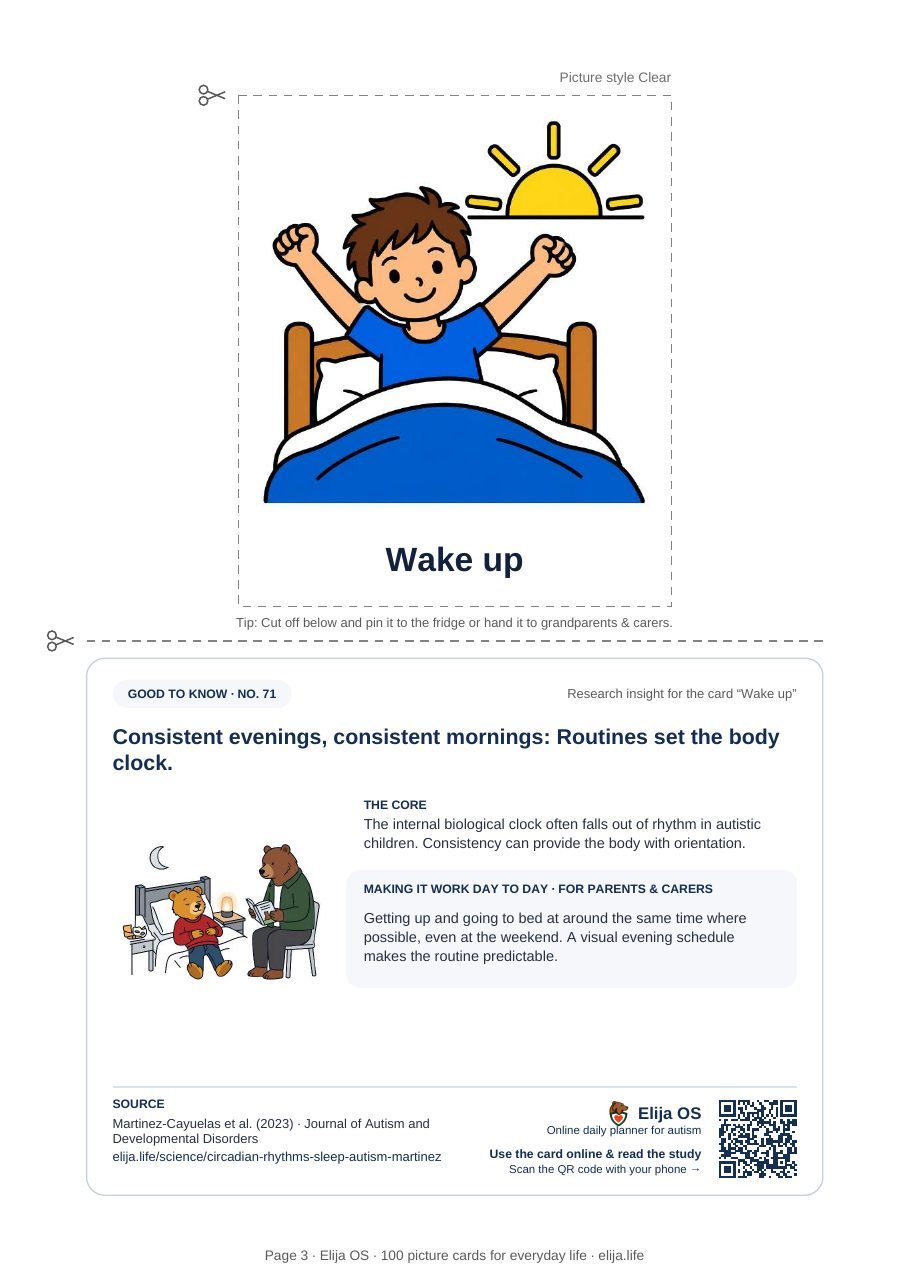
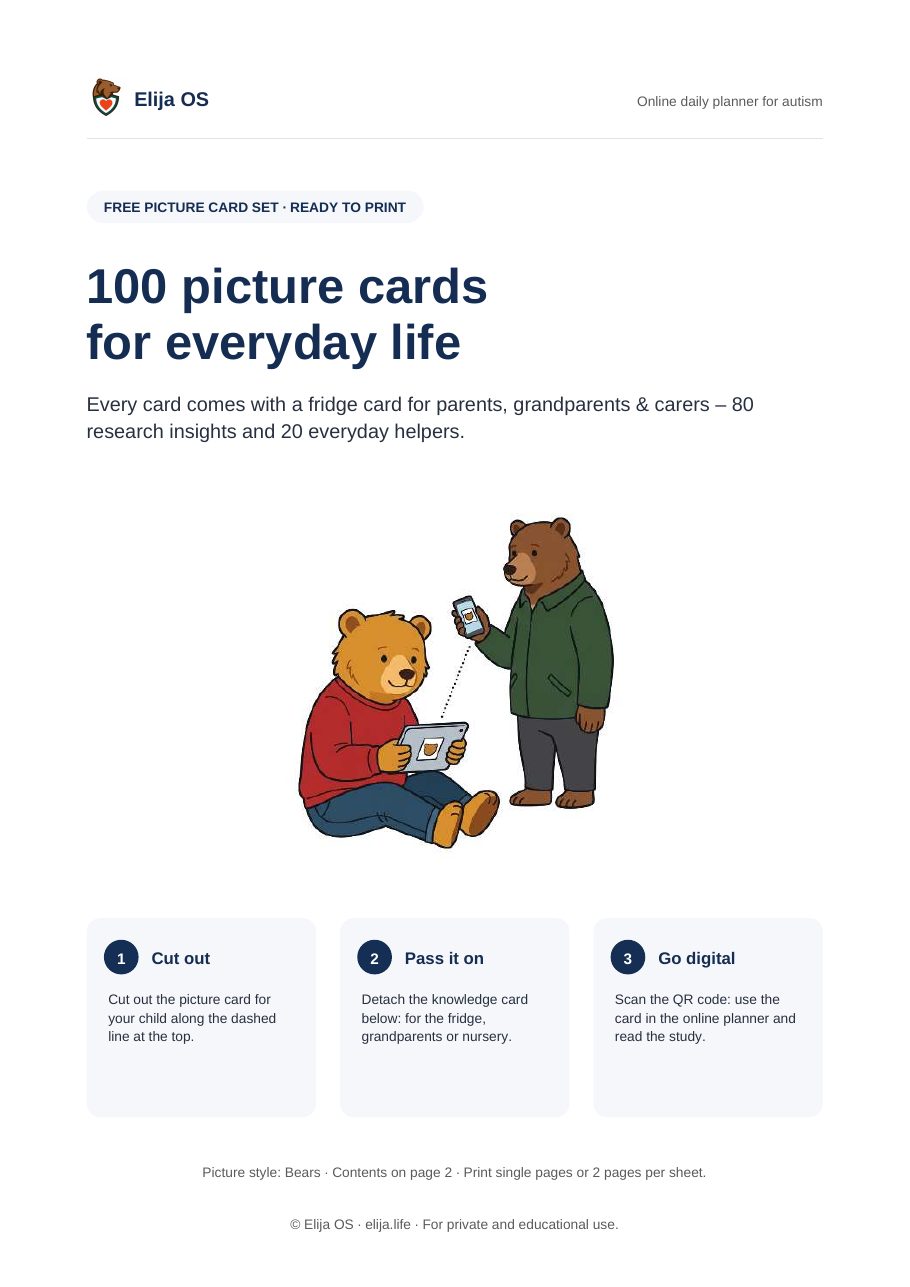 102 pages